

Don’t be a goof!
Be dogged in exercising your right to VOTE tomorrow.
Don’t be a goof!
Be dogged in exercising your right to VOTE tomorrow.
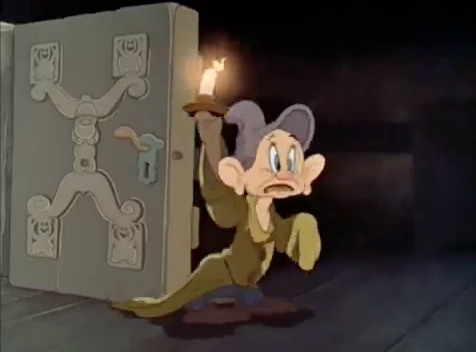
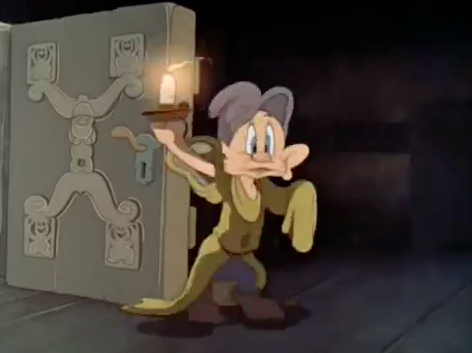
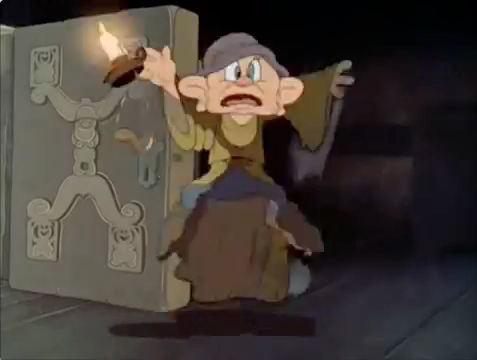
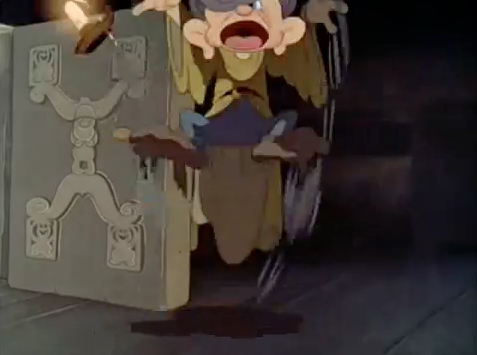
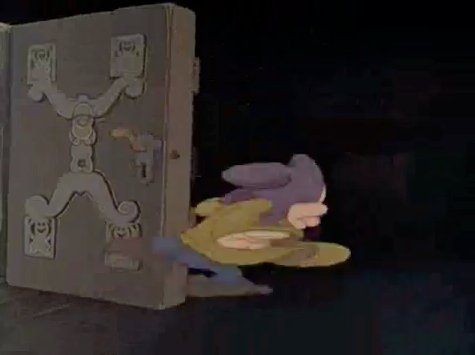
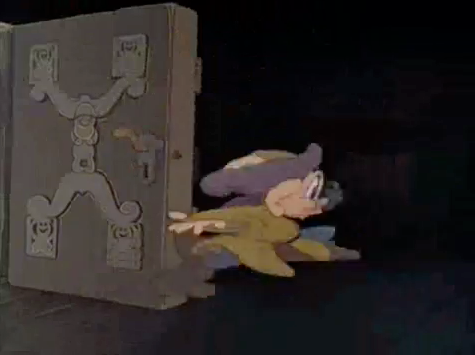
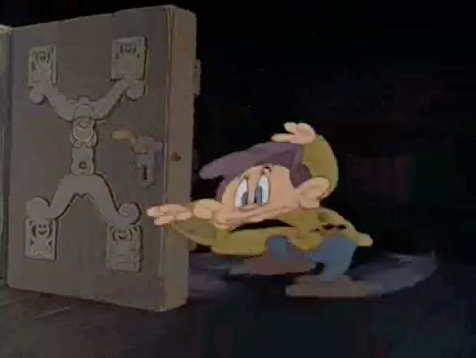
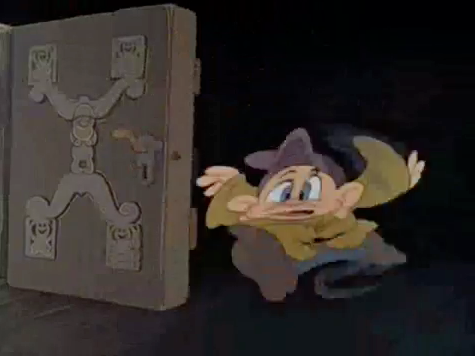
Here’s closer look at an Art Babbitt scene from the “Spooks” sequence of Snow White. If there were ever a chance to identify the style of animator, here is one. This crazy scramble when Dopey thinks there’s a ghost in his bed is so looney and zany, and years before its time.

Fred Moore developed the overall design of the Dwarfs, and he and his buddy Art Babbitt shared the load of animating Dopey. Scroll down and check out these amazing smears!

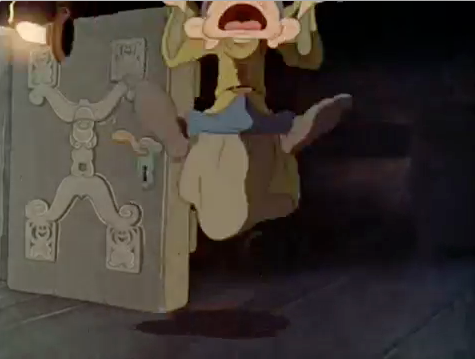
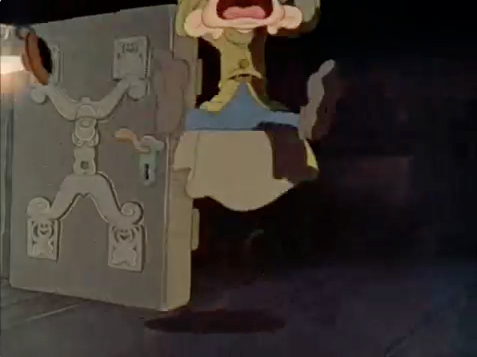
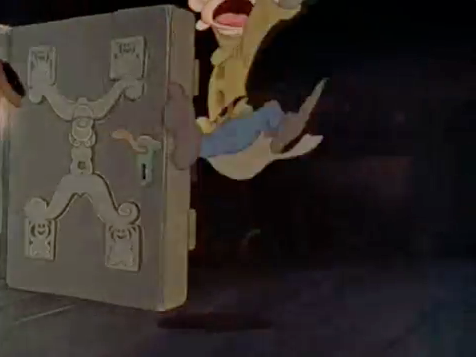
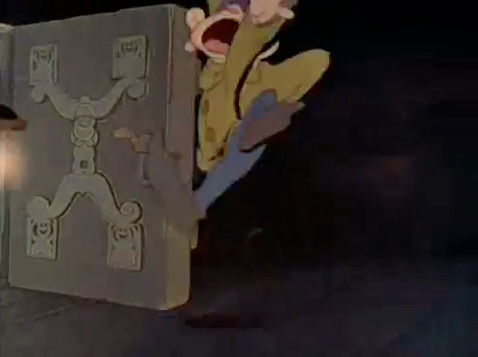
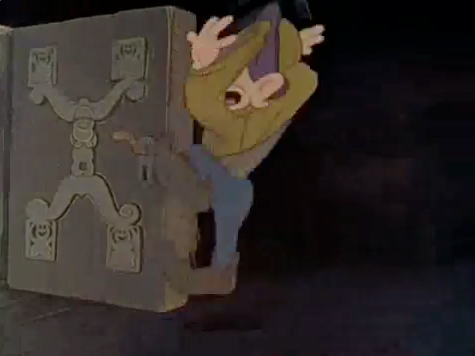
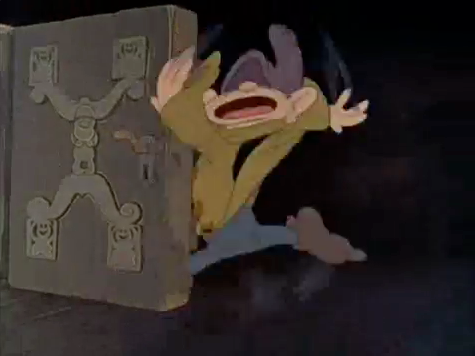
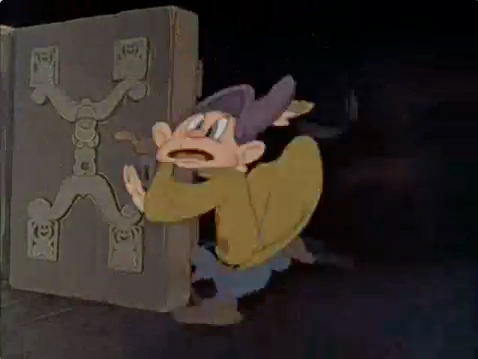
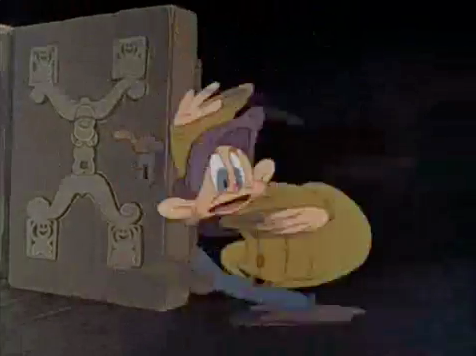
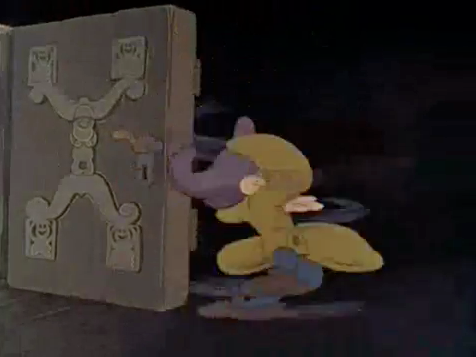
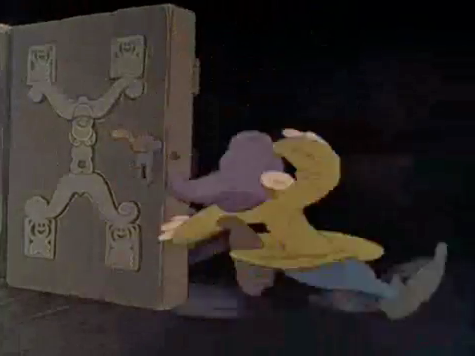
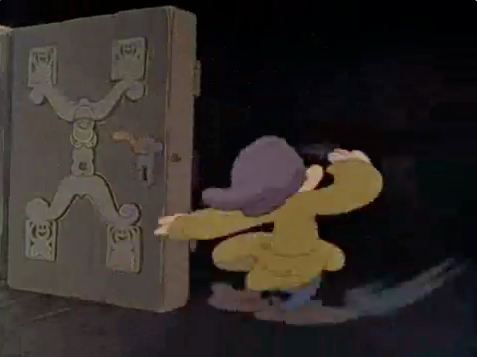
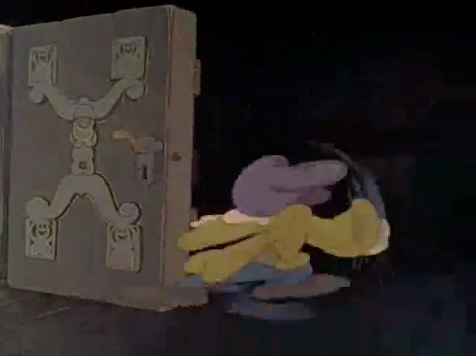

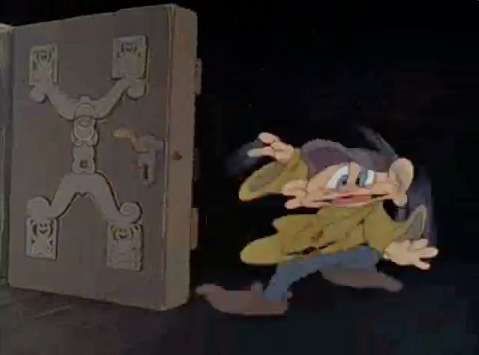
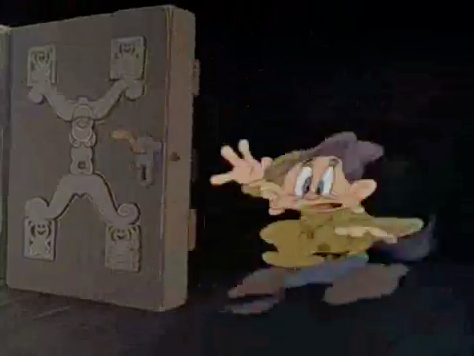


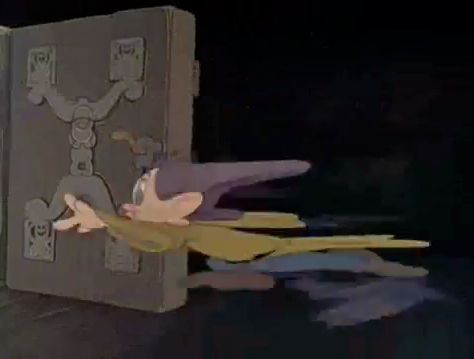
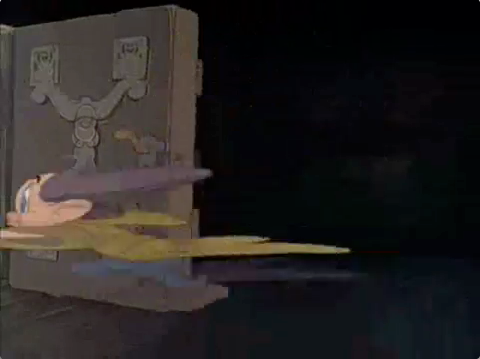

Happy Halloween, animation fans!
The “Spooks” Sequence of Snow White and the Seven Dwarfs contained some beautiful Dwarf animation by Babbitt.
Along with the Wicked Queen, Dopey was Babbitt’s other main character in the film.
.
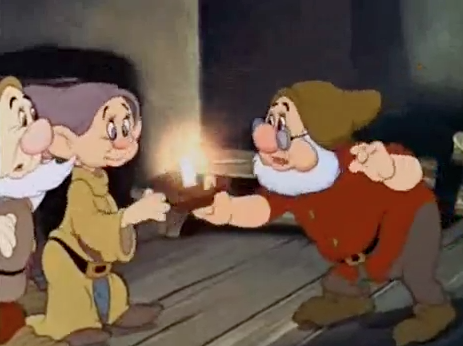 Watching these scenes two or three times, it’s fun to let the eye wander and see what other ancillary animation is done.
For instance, when Doc offers the candle with his shaking hand, you can see Dopey’s determination to get that spastic candle. What a treat!

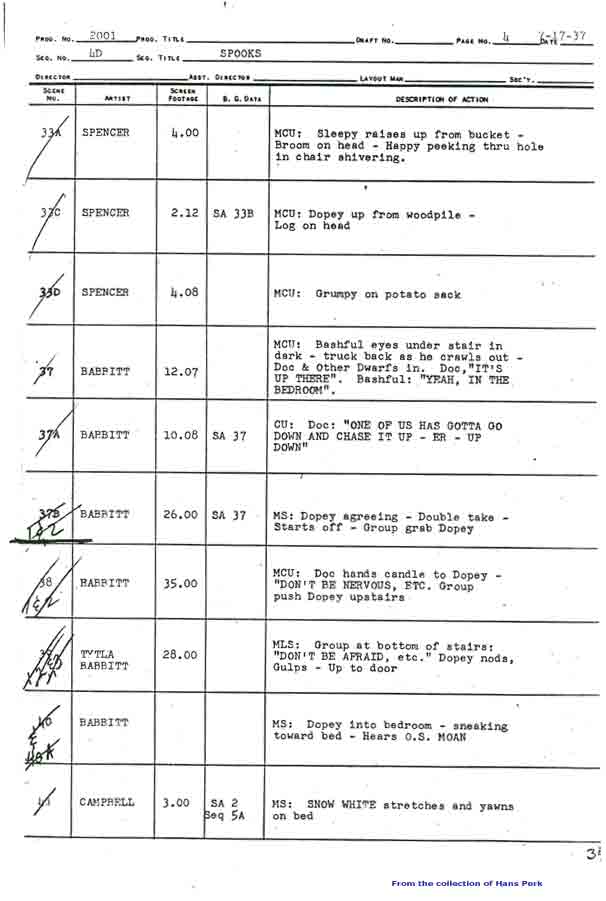

Special thanks to Hans Perk at the A. Film L.A. blog for posting the original workdrafts of the film so we can see who animated what.
This Goofy scene from Mickey’s Amateurs (1937) was animated by Art with live reference (a technique he developed), and it happens to be one of my favorite bits of animation ever. I remember seeing it as a little kid back when the Disney Channel showed actual cartoons, and I loved – loved – how wacky and fast-paced it was. There’s so much alive in this piece. Everything is moving all the time!
There’s not a lot of classic Disney animation that can rival the zaniness of Bugs Bunny or Daffy Duck. This not only rivals it, but surpasses it for two-and-a-half beautiful minutes.
.
As a matter of fact, Art’s brother Ike Babbitt was an actual professional One-Man-Band. It is known that Art was contributing ideas to story meetings at this time, and I wouldn’t be surprised if this piece of animation was directly inspired by Ike.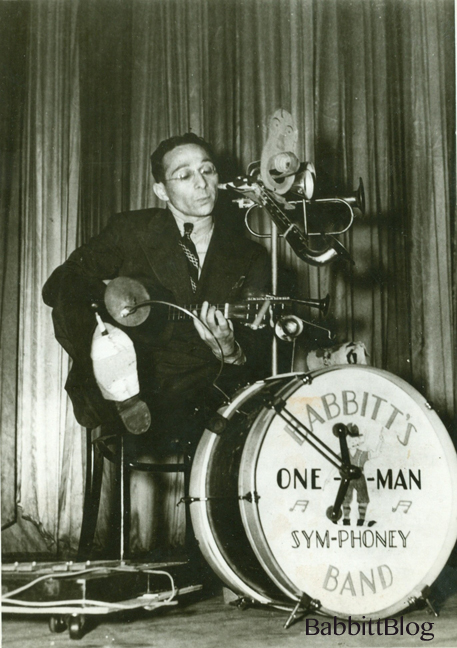
.
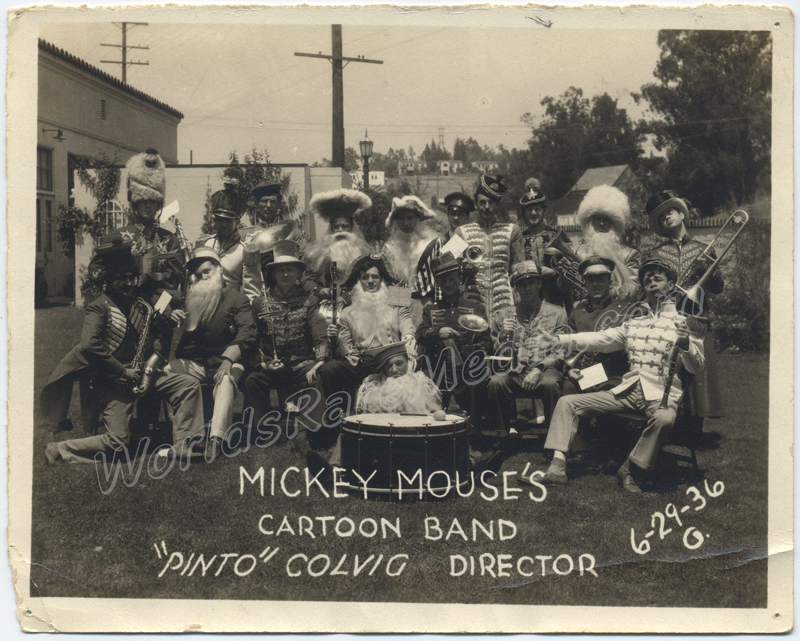
As a bit of Disney trivia, the voice of Goofy, Pinto Colvig, who played clarinet as a professional circus clown, had organized a huge company marching band at the Disney studio in the 1930s, and Art was the mandolin player. This animated sequence might have been inspired by Colvig’s tumultuous and eventually fruitless efforts to make something of this unwieldy band. (Fact: it pissed Walt off and he fired Colvig during the making of Snow White. But that’s another story!)

 Today the New York animation community honored one of animation’s finest artists: Tissa David, with a special screening of clips of her sequences, as well as words by speakers who knew her.
Tissa was a woman in a man’s industry, and before passing away on August 21 at age 91, had cemented her spot in animation history.
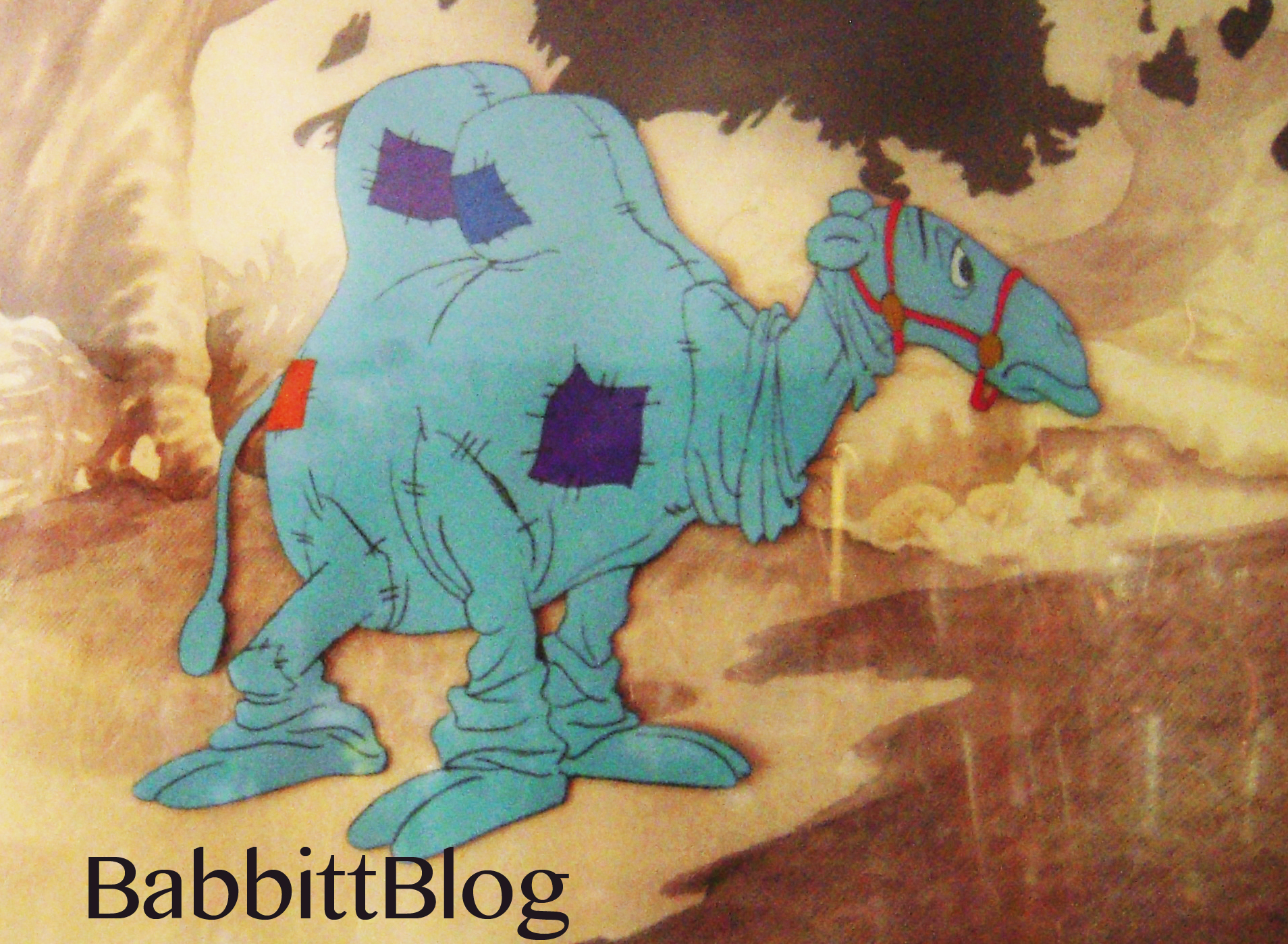
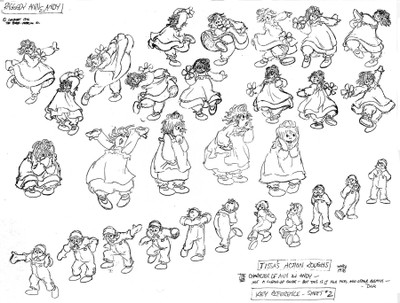
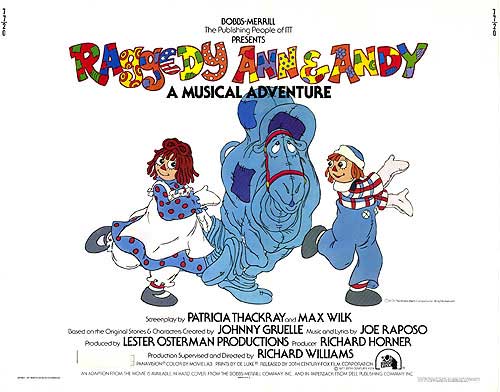 She worked with Art Babbitt as a fellow master animator on Richard Williams’ Raggedy Ann and Andy: A Musical Adventure (1977). Tissa, who specialized in female characters, was a head animator for Raggedy Ann, while Art, who always specialized in toddling characters, was in charge of the Camel with Wrinkled Knees (original cel courtesy of Jackie and Red Auguston).
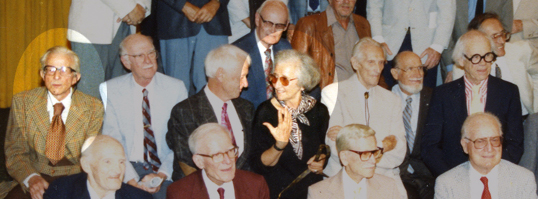
Below is Tissa and Art in 1990, at the last great gathering of classic animators: Grim Natwick’s 100th Birthday (Courtesy of Michael Sporn). Tissa was Grim’s animation assistant for many years, and Grim and Art’s collaboration go back to 1930s at Disney and into UPA.
On a personal note, Tissa’s was my very first interview in my professional writing career, for a 1000-word article in Animation Magazine about New York’s women of the animation industry. On December 31, 2005, I had the privilege of sitting in Tissa’s Westside apartment and hearing stories about her career. Although her thick Hungarian accent reminded me of the sweet matriarchs in my family, she was a no-nonsense lady with a youthful vigor about her. We spoke for 45 minutes, but here is her quotation that got me thinking “what if?” [and as an Art Babbitt fan, “what if” is a pretty common thought process]:
“You know, Disney never hired women. Never. All men. And it was a mistake. It was a mistake. Ollie Johnston once said [looking at female character animation], ‘How do you do that?’ I said, ‘I used to be a young girl, at one time.’ Because a man would never ever really animate a female character – a girl – the way a woman animator would. Their mean [villainous] women characters – they were all great. But not the girls. And mostly I thought that the girls in Peter Pan – oh, very terrible with the girls. As girls, not as animation; they were fabulous animators. But as girls…”
……………………….Mazel Tov!……………………….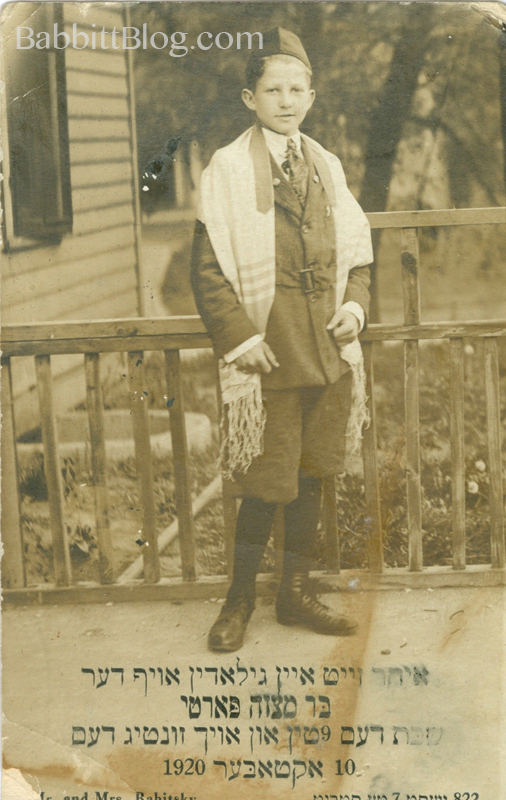 In case you’re not fluent in Yiddish:
You are invited to the
Bar Mitzvah Party [“party” spelled phonetically]
Saturday the 9th and also Sunday
the 10th of October, 1920
Mr. and Mrs. Babitsky 822 West 7th Street [Sioux City]
The Hebrew date of Art’s Bar Mitzvah service was the 28th of the month Tishrei, which, consequently, is also this weekend. Happy anniversary of your Bar Mitzvah, Art! You are now a man. And then some.
The portion of the Torah that is read on this date is the book of Noah. Did Arthur identify with Noah and his underdog qualities, riding out a storm until he and his vessel reached safety?
Art would say in his later years, “I’m an atheist, thank god!” But at one point, his Jewishness was fundamental to his life. His father, Samuel, was a learned man in the Jewish texts, and Art’s sister remembered that at Samuel’s funeral, even the rabbi honored him with this praise. When they moved to New York, Samuel got a job as a “shamas,” a caretaker for a synagogue.
Art seemed to have had a religious crisis after his father, a man of the Book, suffered a horrific accident. But more on Samuel Babitsky at a later date.
Happy birthday Art Babbitt , you ol’ so-an’-so! You’ve lied about your age before, but I’m afraid there’s no arguing that today you’re 105 years old.
In around 1940 you and your lovely wife Marge hosted a brunch at your house on Hill Oak Drive. Some of your best Hollywood pals were there, including Disney animator Les Clark, sculptor Pierre Gagnine (in the stripes) and Elly Horvath (designer).
Tomorrow is Art Babbitt’s birthday. In the meantime, enjoy this: a hi-rez image of my favorite protest sign from the 1941 Disney strike.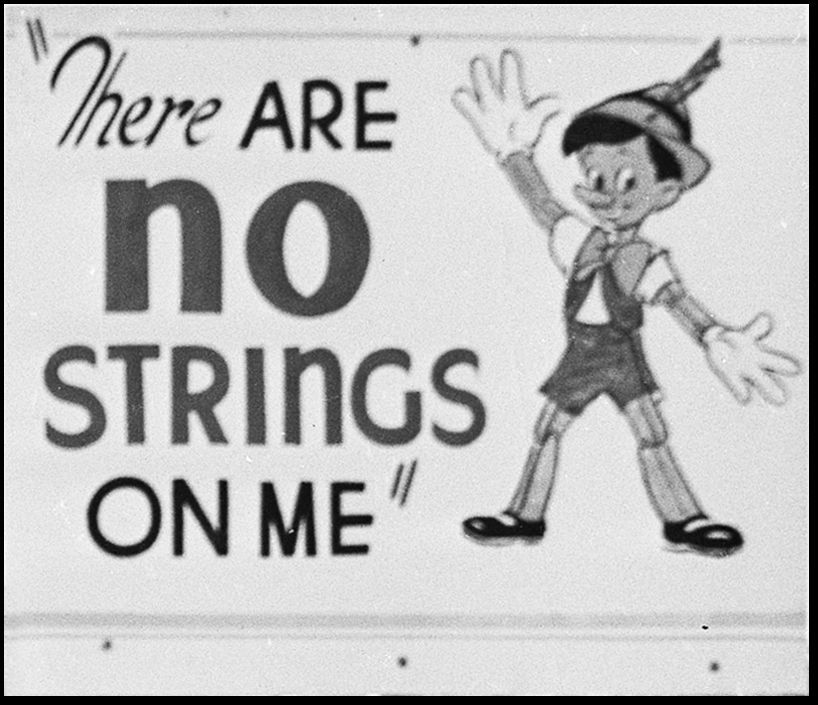
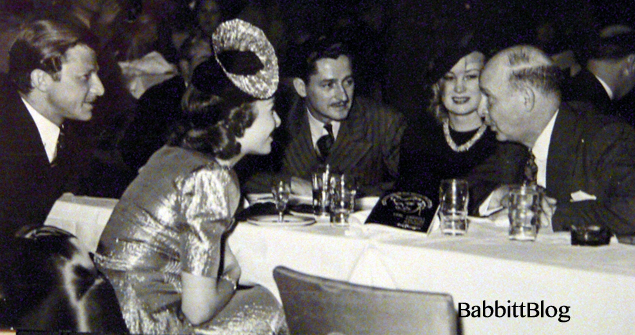
L-R: Art Babbitt, Marge Champion, Les Clark, Mimi Clark, Gunther Lessing
Just about a week ago, we had 2 labor milestones:
The one-year anniverary of the Occupy Movement (starting in Wall Street, New York)
and the completion of the 70th full year of Disney’s company union (on Sept 21).
Ok, it’s pop-culture honey for hornets to point out a Walt Disney scandal. As an icon of childhood innocence, it’s unfortunate (and predictable) that his name has been tarnished by attention-seeking mudslingers.
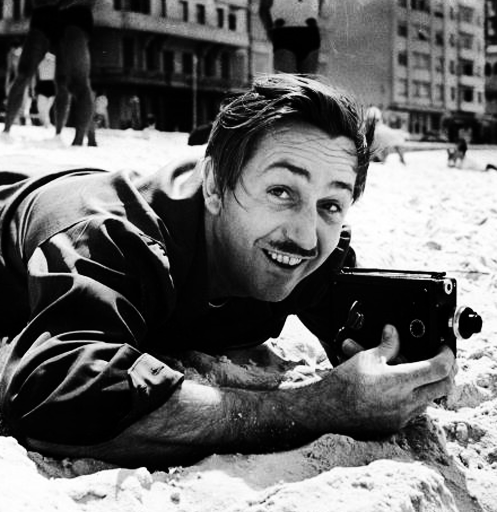
Walt Disney 1941
I am not one of them. I have incredible respect for Walt Disney as a storyteller and entrepreneur. The man is the living embodiment of the American Dream. And I’m educated enough in the history of the animation industry to know that, though he didn’t actually draw a frame of animation, he was still an artist of story, and a decent fellow with very human qualities.
Those who did draw those frames – 330 artists, in fact – are the ones who were on strike outside the Disney studio gates in 1941.
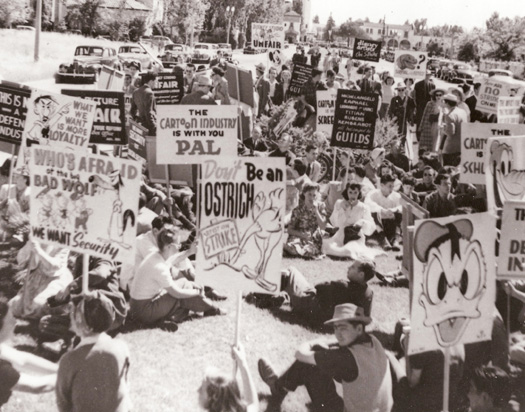
It even looks like the occupy movement!
There was a vacant grassy lot across the street. It was convenient, and it overlooked the studio. Their picket signs were emblazoned with images of Disney characters, and against the cloudless summer sky, it must have been quite a sight. Professionally-rendered Disney characters protesting their own creator – now that’s moxy!
Union talk had been in the air for some time before the 1941 strike. The 1930s was the heyday of Hollywood unions, birthing the Screen Actors Guild, Screen Writers Guild, and several others that are still in use today. Disney’s lawyer, a bald gopher of a man named Gunther Lessing (see photo at top), had devised “company unions” to placate the artists and keep the feds off their trail.
Yes, there was a time with the President of the United States supported unions enough to create the National Federation of Labor! Imagine the government waltzing in and arbitrating a labor dispute in favor of the strikers!
President Roosevelt had been a New York governor – and that’s a significant thing when Manhattan was still reeling from the Triangle Shirtwaist Fire that killed 146 trapped laborers. Roosevelt inherited a failing economy in 1933, and spent his first 100 days in office composing bills to alleviate the Depression (that’s where the “first 100 days” watchdogs got the idea). Roosevelt’s New Deal initiatives were blocked again and again by the Supreme Court, often being labeled “unAmerican.” (I mean, “New” is good! “Deal” is good! What’s not to like?) Of course by the economic depths of 1940, Capitol Hill had allowed the president more leeway.
 Enter Art Babbitt. One of Disney’s creative circle. And a New York liberal.
Babbitt had come from New York City, having spent his young adulthood working in Manhattan as a commercial artist and animator. He lived in the grit of Brooklyn back when it was truly gritty, and he struggled as the main breadwinner in his family of six. Even after earning a high salary at Disney’s, Babbitt continued talking about labor rights with his coworkers. In 1941 he was fired for union activity – an illegal move on the company’s part – and the next day the strike was called, with Babbitt as its key leader.
From May 29th through August, Walt’s company was in business turmoil. The National Federation of Labor finally stepped in and voted in complete favor of the union, but it wasn’t until September 21st that artists were re-hired (with back-pay), and that work started to find its normalcy once gain. It didn’t come easily or quickly, but the Occupiers had a complete victory.
Today it’s a thought far from the minds of Lion King fans and princess wannabes, but as this summer closed, the Walt Disney company celebrated its 70th full year as a union shop.
What tickles me most about it is that somewhere on the planet, a top CEO – the type who fights unions – is enjoying a Disney film with his or her child. That film wouldn’t even exist if not for the success of the labor strikers!
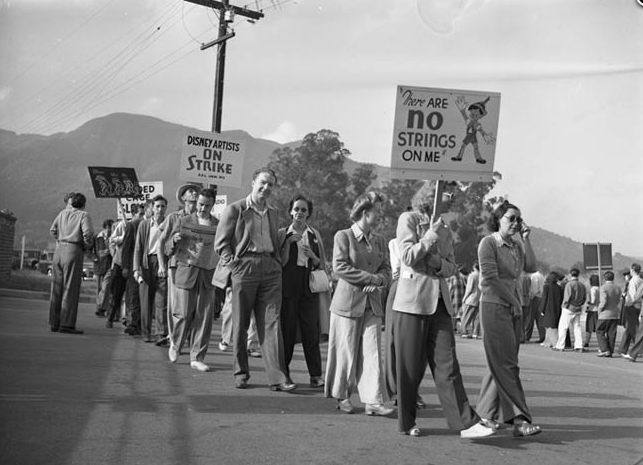
Disney Strikers
That, and the idea that a child in the highest tax bracket is watching the same Disney animation as the rest of us. The 1%ers who settle for nothing but the best of everything are watching the same Disney masterpieces the rest of us are – thus making Disney animation one of the few great equalizers on the economic front.
And these masterpieces would not have been made if not for gutsy animators who risked everything.
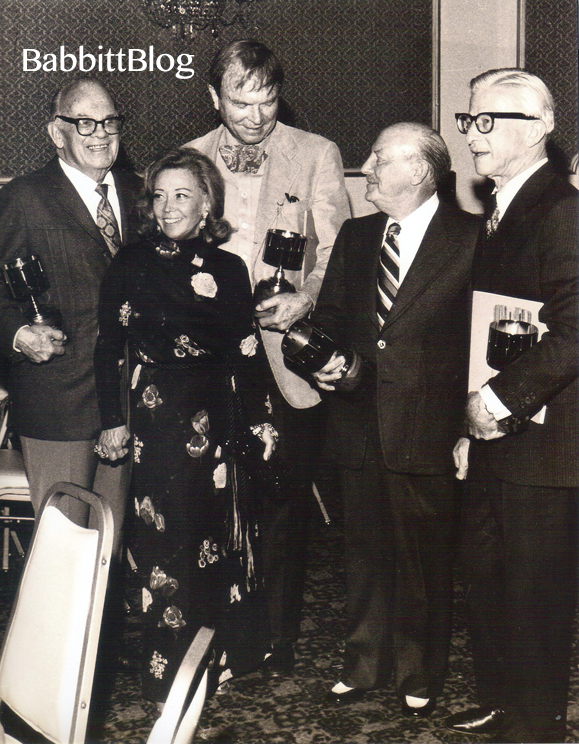
L-R: Tex Avery, June Foray, Chuck Jones, Friz Freleng, Art Babbitt
The Annie Awards is the Oscars for the animation industry: the highest honor awarded by one’s peers in the animation field. The tradition was started by the incredible June Foray, a ubiquitous voice talent from the Golden age of Looney Tunes up to today (including Witch Hazel, Granny, Rocky the Flying Squirrel, Cinderella’s evil cat Lucifer, Magica de Spell, and thousands of others).
In 1974, the third annual Annie Awards went to the achievements of Tex Avery, Chuck Jones, Friz Freleng, and Art Babbitt.
Tex, Chuck and Friz are all best-known for being the barometers by which all zany cartoons are measured. They are all credited as being fathers of Bugs Bunny, Daffy Duck and Porky Pig, and later on developing unique styles and characters that shaped all of cinema. Tex invented the exaggerated takes and fast-paced action. Chuck broke from the storytelling limits of the cartoon short, and Friz’s style… well… he was the director behind Yosemite Sam, Sylvester & Tweety, and the Pink Panther!
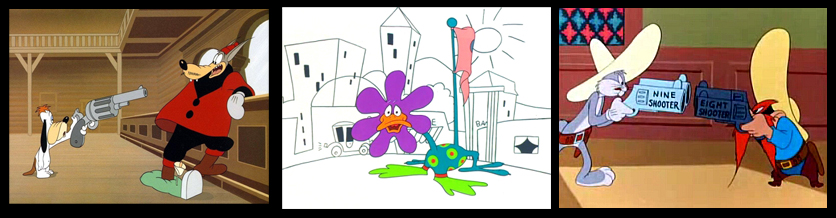 It’s funny that Art Babbitt was grouped together with these guys. In 1974, he was still best-known for his groundbreaking work at Disney form 1932-1941. But Walt Disney didn’t receive a posthumous award until the next year, and the first Disney loyalist to receive one was Ward Kimball 1976.
Yes. Art Babbitt received an Annie Award before Walt Disney did.
At this time, Babbitt had been directing commercials for Hanna Barbera for about nine years. Fred and Barney sold cereal, Tom and Jerry sold jam, but mostly it was a place where Babbitt got to mingle with the other top dogs of American animation. (Chuck Jones and he were already friends, dating back to the Disney Strike.)
So here Art is grouped with three great non-Disney directors, who had and have achieved legendary status within the realm of cartoon shorts. Today, I would guess that your average Joe would recognize the name Chuck Jones, and maybe Tex Avery and perhaps Friz Freleng. But it’s doubtful he would know who Art Babbitt is.
 babbittblog