Ever the puckish trickster, Ward Kimball caricatured himself and his fellow animator as the parade of bullfighters in the 1938 Oscar-winning short, Ferdinandthe Bull. The two-page spread below is from a film magazine in Babbitt’s personal collection. This bit of animation is worth re-watching (aw hell, the whole short is worth re-watching) – Kimball’s animation is a window into his coworkers: Freddy Moore is toddling like a carefree child; Tytla, a true equestrian, is confidently atop his steed; and Babbitt is strutting defiantly, almost like he owns the place!
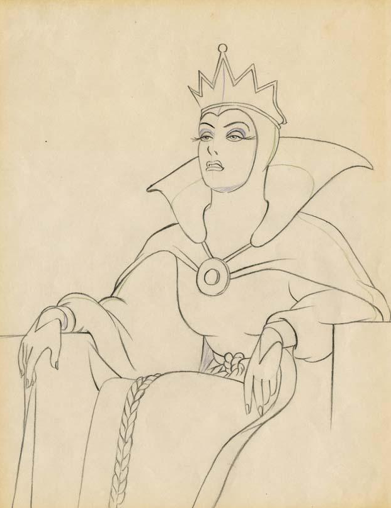
“You know, even as a kid I always went for the wrong woman. I think that’s my problem. When my mother took me to see Snow White, everyone fell in love with Snow White. I immediately fell for the Wicked Queen.” – Woody Allen.
Enjoy this clip from Annie Hall (1977) honoring one of Babbitt’s greatest contributions. Animated by UPA veteran Chris K. Ishii.
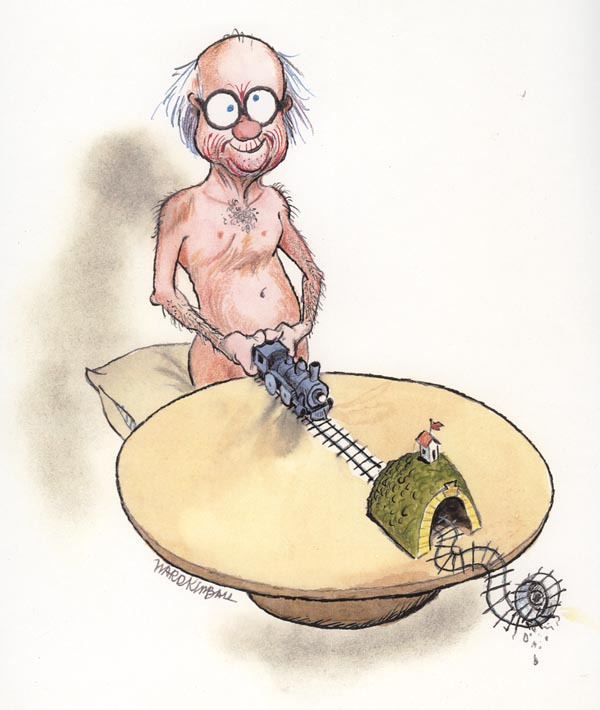
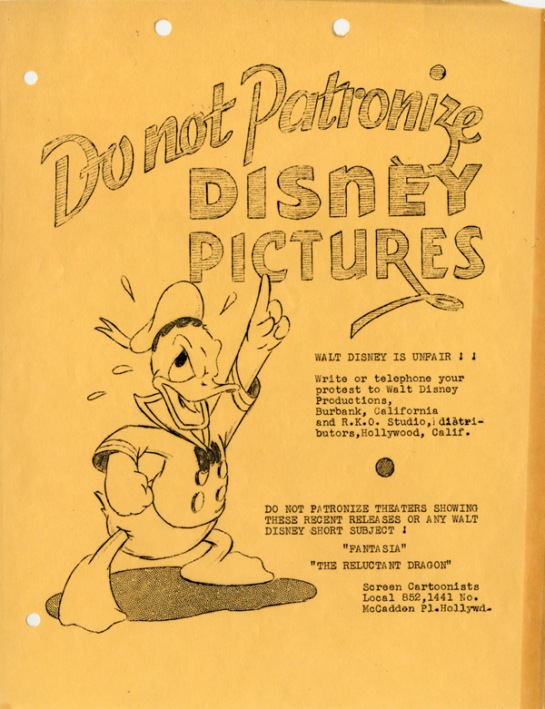
Of all the real-life characters in Disney history, Ward Kimball (b. 3/4/14) is one of the most fascinating. Among the “Nine Old Men” of Disney animation, i.e. the company loyalists, Kimball was the only one who unequivocally felt that the Disney Strike was a good thing – so much so that Babbitt almost convinced him to stay outside. Kimball was also the only one of them who Walt Disney himself dubbed a true genius. He had joined the studio on April 2, 1934 and remained a company man, as well as a liberal, throughout his life.[1][2].
.
Kelly by Kelly
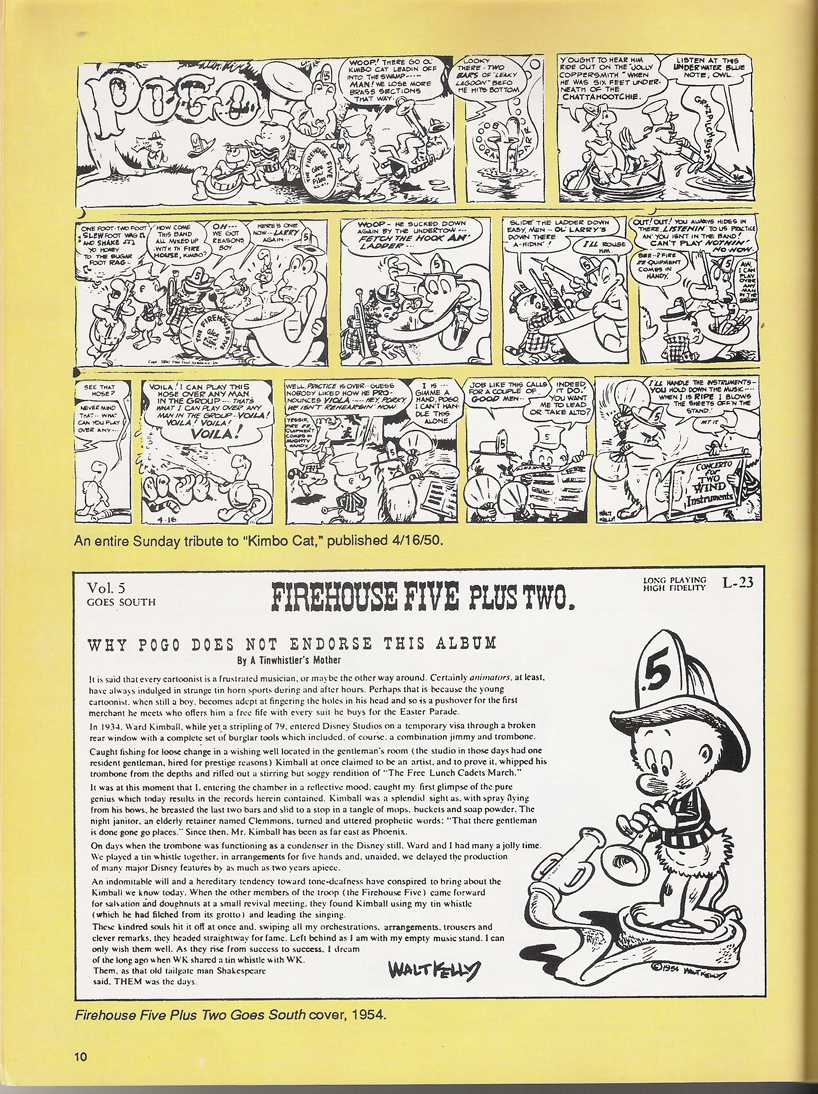
Walt Kelly (b. 8/25/13) first started working for Disney on January 6, 1936, in the animated shorts’ story department working on storyboards. He requested to transfer to the animation department, and at the end of 1939 found himself in Freddy Moore’s unit, a junior animator under Kimball. When the Disney Strike erupted on May 28, 1941, during which time Kelly was supporting his family of three on $85 a week, he found himself with friends on either side of the picket line. Instead of choosing, he took leave to visit his sick sister back East. He never returned to Disney, but instead became a legendary comic strip artist, crafting the funny-animal genre into political and social satire with “Pogo”.[3][4]
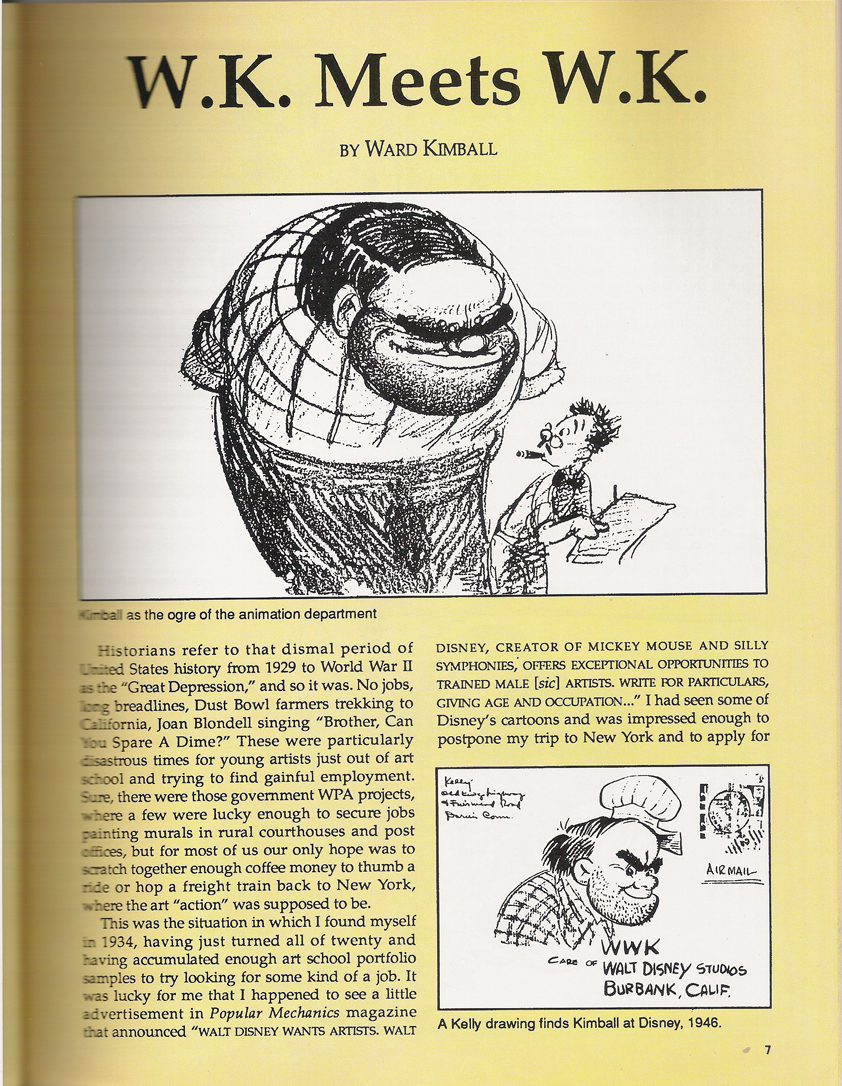
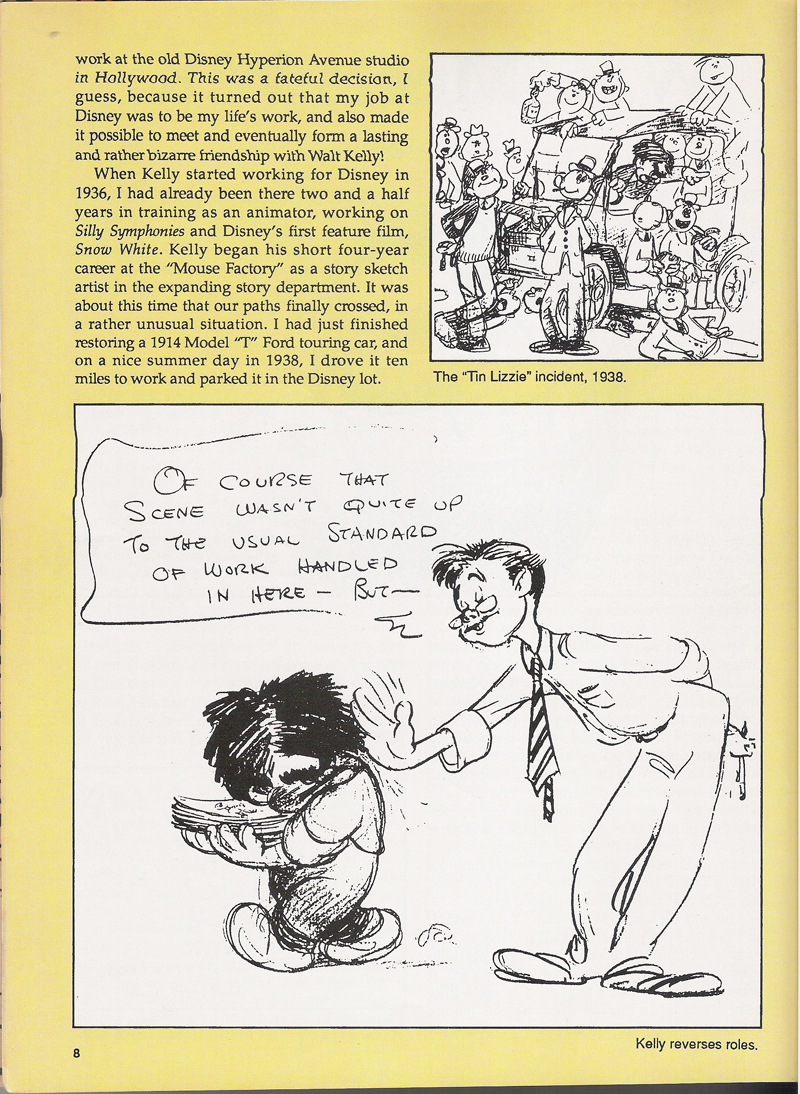
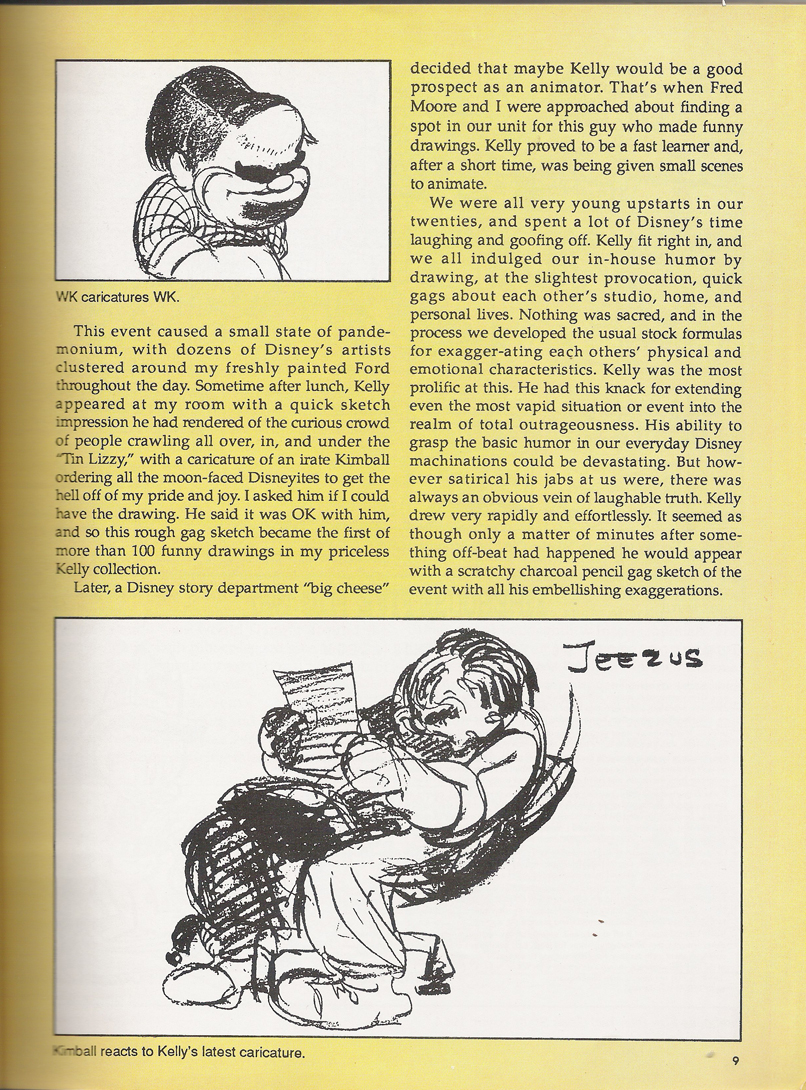
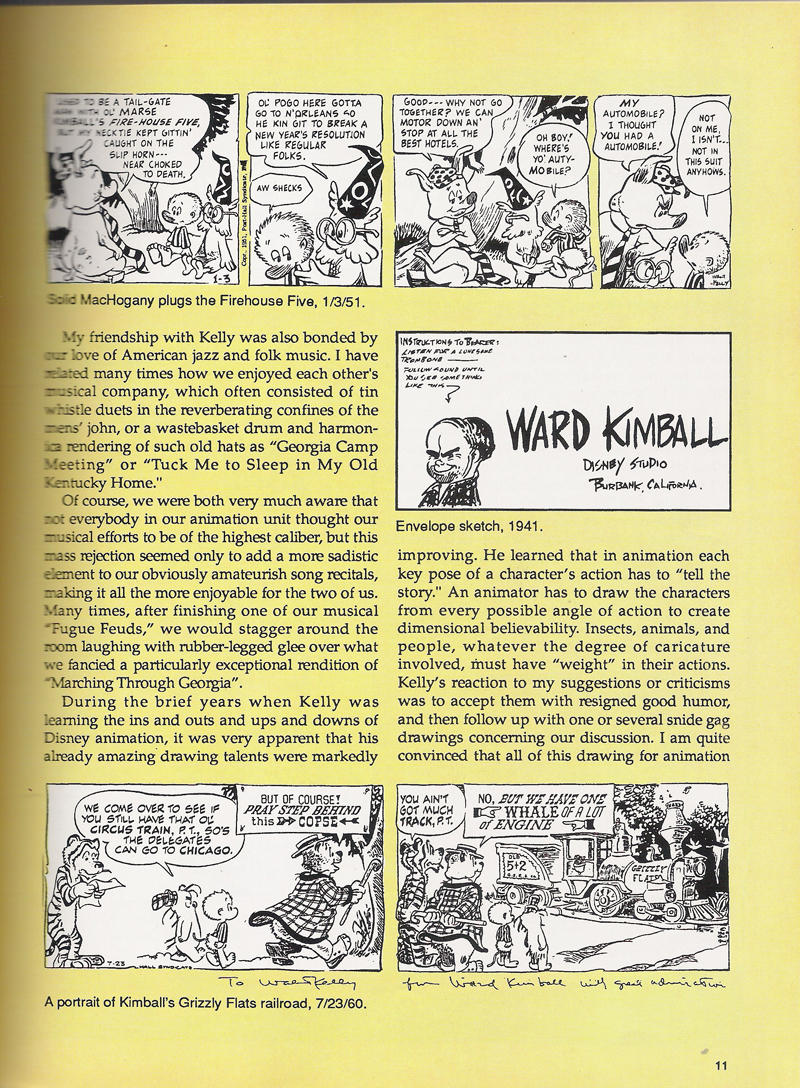
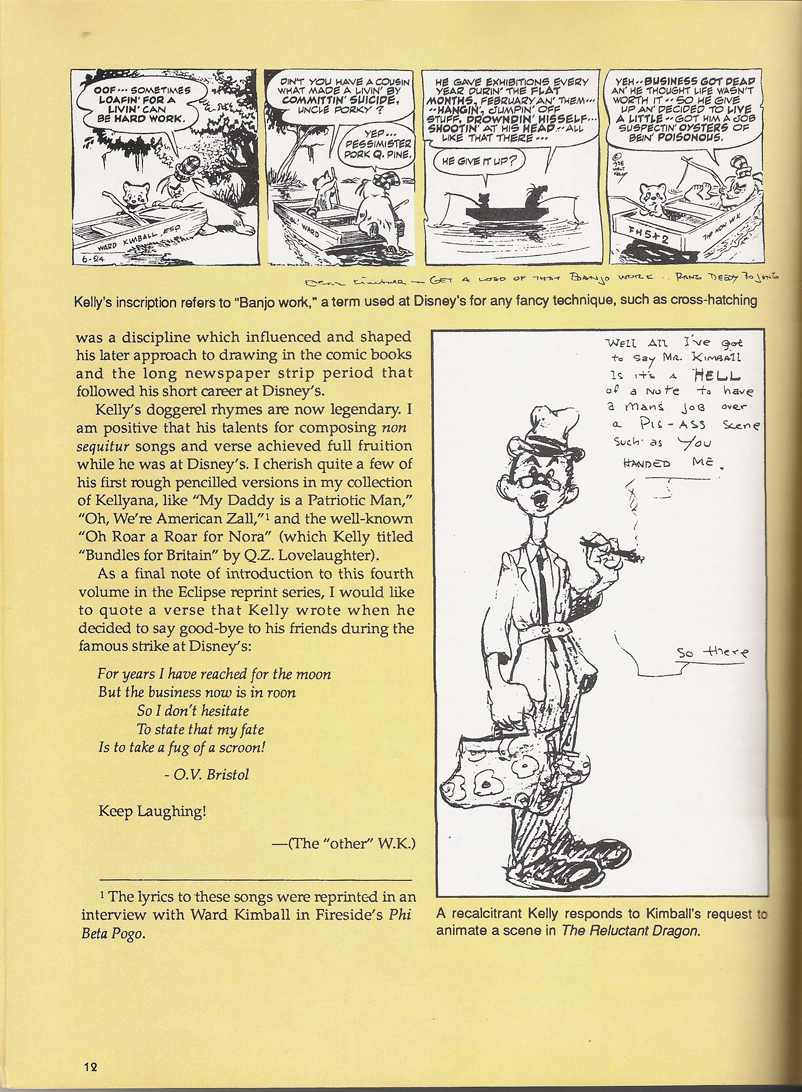
The quirky friendship between Kimball and Kelly is one of my personal favorite bits of Disney history, if only for their stories of hijacking the bathroom to play old-timey American standards on the tin-whistle, harmonica and waste-paper basket. To me, this is what Golden Age of animation is all about. But read it for yourself in Kimball’s own words, as prefaced in Eclipse Books’ Pogo and Albert #4.
Also note Kelly’s lyrical last words as the Disney Strike dawned.
Kelly by Kelly
Kimball by Kimball
Sources:
Walt Disney’s Nine Old Men by John Canemaker
Walt’s People Volume 3, edited by Didier Ghez
Pogo Volume 3 by Walt Kelly, Fantagraphics Books, introduction by R. C. Harvey
Well, here we are, in Pittsburgh, on Friday, January 26th. How’s 1940 treating you so far? Brrr — Cold enough for you? Hey, hows about we take in a show tonight? It just so happens I have a copy of the Pittsburgh Press right here. Let’s just flip to the Entertainment section…
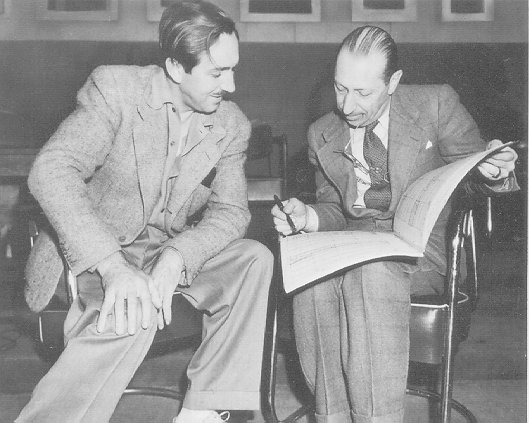
Ooh, Stravinsky is a guest conductor at the Pittsburgh Symphony. And that new feature cartoon Gullivers Travels appears like it might be the next Snow White. Hey, speaking of Snow White, look at this, on the right:
Who’s that performing with the 3 Stooges? “Marjorie Bell: Model for Walt Disney’s ‘Snow White‘”. We can’t miss that! (I also go buggy for Cliff Edwards.)
* * *
This was the tour that cost Art and Marge their marriage. According to her, the tour was scheduled for ten weeks but ran only for three, hitting Chicago, Gary Indiana, Pittsburgh and Buffalo.
Says the world’s foremost Three Stooges expert, this 1940 tour included Chicago’s Oriental Theater from January 19-24, and Pittsburgh’s Stanley Theater from January 26-February 1, possibly hitting Stubenville, Ohio for a Sunday show on the 28th.
Marge was barely twenty when she toured with this Vaudeville act. She shared a hotel room with tap dancer Evelyn Farney [1], all the while getting phone calls and letters. It was always Art, asking her to return home to Hollywood. “He was on the phone a lot and writing a lot of letters, and then he gave me this ultimatum, either come home and have babies, or he was going to divorce. And he did; I never went to court.”[2] Marge exchanged her return ticket for a one-way to New York, and the two were divorced later that year. It was in New York where she and Art met up in 1942. “…since Marge + I have been divorced 2 years…,” wrote Babbitt, “I’m trying hard to grow civilized and I can’t make myself dislike a very charming person just because our marriage bumped into a career.”[3]
Sources
TV Legends Archive Interview with Marge Champion, by Sunny Parish, 10/30/98.
Marge Champion interview with John Canemaker, 10/26/94
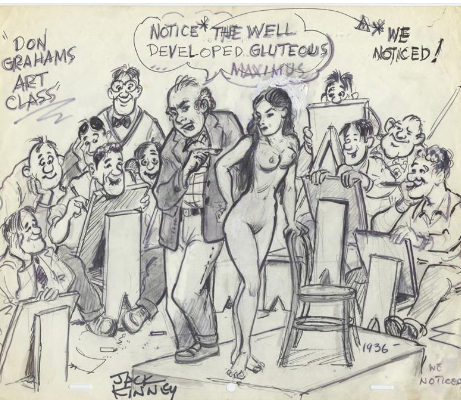
For the Disney artists of the 1930s and early 40s, a huge credit of their exponential growth is owed to the in-studio art classes. And while teachers like Don Graham and Eugene Fleury deserve their due, this post is to honor the unsung heroes: the models — particularly because many did indeed have different relationships with a certain Disney animator named Art Babbitt.
Babbitt went through two other models before finally connecting with Doris Harmon, who ran the agency that would provide the Disney artists with their art models for years. [1] Harmon was once a model herself who started the Southern California Models Club, a network of more than 500 artists models of all ages and body types. She hired out her models to schools and private sessions, but for Disney she either went herself or passed the gig to a chosen few. [2]
Babbitt and she became friendly acquaintances. He was impressed by stories of Harmon’s mother, a Kansas City lady who apparently got in trouble with the law for shouting the Bill of Rights in public places.[1] He filmed Harmon half-nude doing an African-style dance; though Babbitt often shot film for reference, this footage looks more like an art piece in its own right.
One way or another, Babbitt built himself a reputation throughout Harmon’s Models Club for being a Lothario – until he became romantically involved with a brunette named Sandra Stark.[2]
Pronouncing her name “Sondra,” Sandra was an eager camping companion, which went far to earn Babbitt’s affection, and they dated for quite a while. Later in life, as a married woman, she would histrionically refer to Babbitt as the only man she had ever loved.[3] Their breakup happened to coincide with the beginning of Babbitt’s courtship with the teenager named Marge Belcher who started appearing on the Studio lot.
It was Stark who, in 1936, told her friend and fellow model Adrienne le Clerc about a “wild Russian” animator that she had to meet.
Twenty-two-year-old Adrienne was able to land a coveted Disney modeling job on a Friday, when the lead animators were in attendance, and there she finally met Bill Tytla at his drawing pad. Bill and Adrienne began a passionate romance, which irritated Babbitt. Bill and he shared a home together, and Adrienne’s constant visitations and Bill’s divided attention made Babbitt the odd man out. Bill and Adrienne married in April 1938, but even after they moved into their own home, Babbitt never warmed up to her until after Bill’s death in December 1968.[2]
Why was Babbitt so cold to Adrienne for so long? Perhaps the Tytlas’ fiery romance reminded him of his own struggles for love. He dated many women, but never settled down for more than a few years until he married Dina in 1948. He had wanted a family with Marge, but she opted to be a performer instead of a homemaker. He lived a decadent lifestyle with disposable income, and was a creative iconoclast who showed others the way. But for much of his adult life, he just couldn’t get the hang of couplehood, which, when you’re in your twenties, is a good way to build a reputation at a model’s club.
Sources:
Audio letter from Babbitt to John Canemaker, 1979
Disney’s Giant and the Artist’s Model, by Adrienne Tytla, 2004
Conversation between Barbara Babbitt and the writer, 2011
The tall concrete building at 2826 Decatur Ave in the Bronx was owned by Edison Studios up through 1929. Animation director Paul Terry and top animator Frank Moser were fired from the Van Beuren animation studio [1] – perhaps because money was tight after the stock market crash; perhaps because Terry was too slow to jump on the talkie bandwagon. In the autumn of ’29, Terry and Moser formed the independent company Terrytoons and partnered with financial backing company Audio-Cinema Incorporated. According to Paul Terry:
I went over and made a deal with Audio Cinema first. They were to put up all the money for Moser and myself; we were going to do the work for no compensation until the thing paid off …[2]
Audio-Cinema was run by motion picture director Frank Lyle Goldman, whose best-surviving work is “Finding His Voice,” a charming educational cartoon he co-directed with Max Fleischer in (presumably early- to mid-) 1929.
Goldman moved into the Edison Studios building and shared its headquarters with Terrytoons. During that time, Audio Cinema Inc. was involved with Terrytoon cartoon distribution.
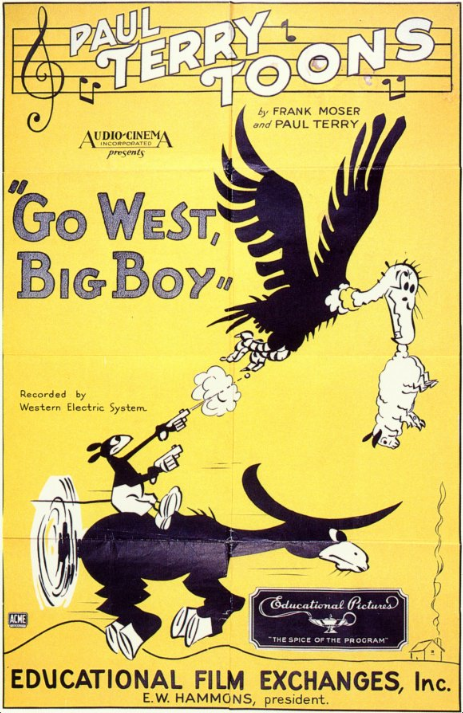
A poster for a 1931 Terrytoons Cartoon, presented by Audio Cinema
In 1930/31, Audio Cinema got involved in feature-length movie-making, and was presumably hired by United Artists to produce the latest (and eventually last) film by cinema giant D. W. Griffith. Titled The Struggle, the film follows the rise and fall of a drunkard played by Vaudevillian Hal Skelly, opposite his love interest Zita Johann. (The film score was written by Terrytoons in-house composer Phil Scheib.[4]) All interior scenes were filmed at 2826 Decatur, and as remembered by Art Babbitt,
…We worked in the old Edison Studio, on 199th and Decatur Street, in the Bronx. There was a costume room downstairs where we cold pick up old Buster Keaton costumes and so on, you know, just come back when it would least be expected dressed up as somebody else. And it was there that I saw D. W. Griffith direct a picture with Zita Johann and Hal Skelly.[3]
In a hand-written list of Terrytoons memories, Babbitt wrote:
“9) D. W. Griffith – shooting one of his last pictures on Soundstage of old Edison Studio. 198th + Decatur st.
“10) Moving cabin to kill camera noise + shooting through glass. …
“11) D. W. Griffith making little girl cry by whispering in her ear.”
My best guess of what this “moving cabin” is would be a booth that fit around the camera so the mechanical camera sounds would not be picked up by the actors’ microphones.
This reference to making “little girl cry” must be eight-year-old actress Edna Hagan. (Hagan is now 90, and if anyone knows how to get in touch with her, I would be interested to know if she remembers this experience.)
The Struggle was released on December 10th, 1931, and, unfortunately for both Audio Cinema and Griffith, was a box-office failure. Of Audio Cinema, Terry said that the film “ruined them; they got themselves into financial trouble. […] We were talking about the creditors moving in on Audio [Cinema]. And so, we were renting space there, but we didn’t want to get locked into Audio’s troubles.”[2]
It was around this time that Babbitt had set his eyes on Disney. By July 1932 he received the invitation for an interview with Walt at his Hollywood studios. Babbitt said,
I did a commercial film, Buster Brown shoes for Frank Goldman who was with Audio Cinema at the time, and this was sort of an interim step before I went to California. [5]
Babbitt’s cousin Elsie remembered:
On his way to Hollywood he stopped in Sioux City to visit for a few days. I remember he had with him one of his own films called “Squeaky,” about a little mouse with over-sized shoes that squeaked. It was quite witty because we all laughed. [6]
Meanwhile, Terry, Moser and their crew moved out of the Bronx building overnight and relocated to a new headquarters in Harlem [3]. Between April and October 1933, Goldman and Audio Cinema permanently moved out of 2826 Decatur. [7]
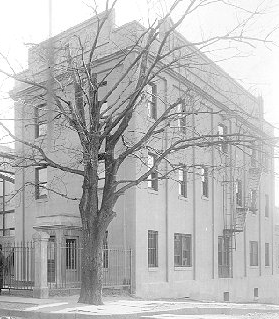
As the years rolled by, the concrete building was eventually abandoned and then demolished to make way for the Edison Arms apartment building. The name “Edison” remains as a tribute known only to those familiar with the brief but significant contribution of this corner in the Bronx to the history of film.
2826 Decatur today (photo by Jake Friedman)
Sources
Hollywood Cartoons by Michael Barrier, p.168
Interview with Paul Terry, by Harvey Deneroff, 1969.
Art Babbitt audio recording at 50th anniversary dinner, 1974.
In 1930, while employed as an animator at Terrytoons in the Bronx, Art Babbitt watched legendary filmmaker D. W. Griffith make a little girl cry on a movie set …
…But this all begins with Thomas Edison.
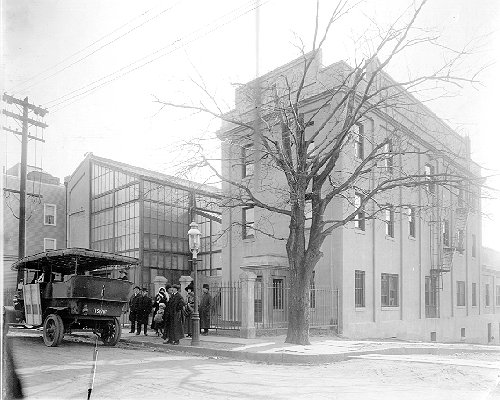
The oblong, drab structure on Decatur Ave between 198th street and Oliver Place in the Bronx was known as the “Edison Building” (its actual address was 2826 Decatur Ave). It was a reinforced-concrete office building 35 feet high, made up of three abnormally tall stories. [1]
In the early 1900s, motion pictures were becoming a huge new industry. About forty theaters would buy prints of the same film which took only a month to a week to make. Business-savvy Thomas Edison was successfully selling short movies filmed on the rooftop of his building on 21st street in Manhattan. But he wanted more space and more epic story-lines.[2]
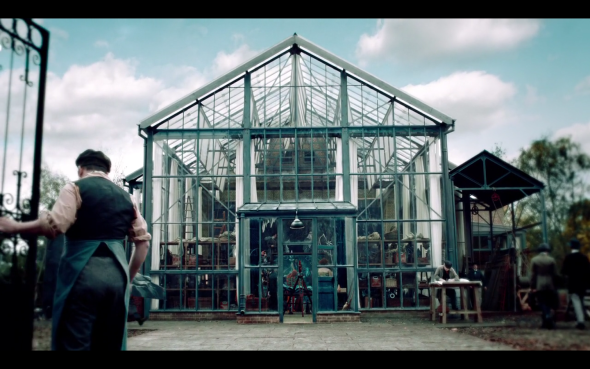
A plot of Bronx land 100 feet by 60 feet was purchased by Edison’s people in June of 1905. The concrete office building was completed and occupied in July, 1907. Adjoining it, glittering like a 40-foot crystal tower, was a giant glass house. In the days before super-powered lights, glass houses that captured the daylight were the only option when shooting a movie, as re-enacted in the period film Hugo (2011). This one cost Edison $100,000. [3]
The cement building at the time contained offices, dressing rooms, chemical laboratories, darkrooms, drying halls and other compartments for processing one’s own film reels. The glass court contained several movie sets that were all used for filming different interior scenes simultaneously.
Edison Studios in the Bronx produced films starting with Stage Struck, directed by Edwin Porter, and starring Herbert Prior as a pauper who helps a group of girls escape their farm for a career in vaudeville. Subsequent films included the western A Race for Millions (1907), and most famously, the very first monster movie, Frankenstein (1910).
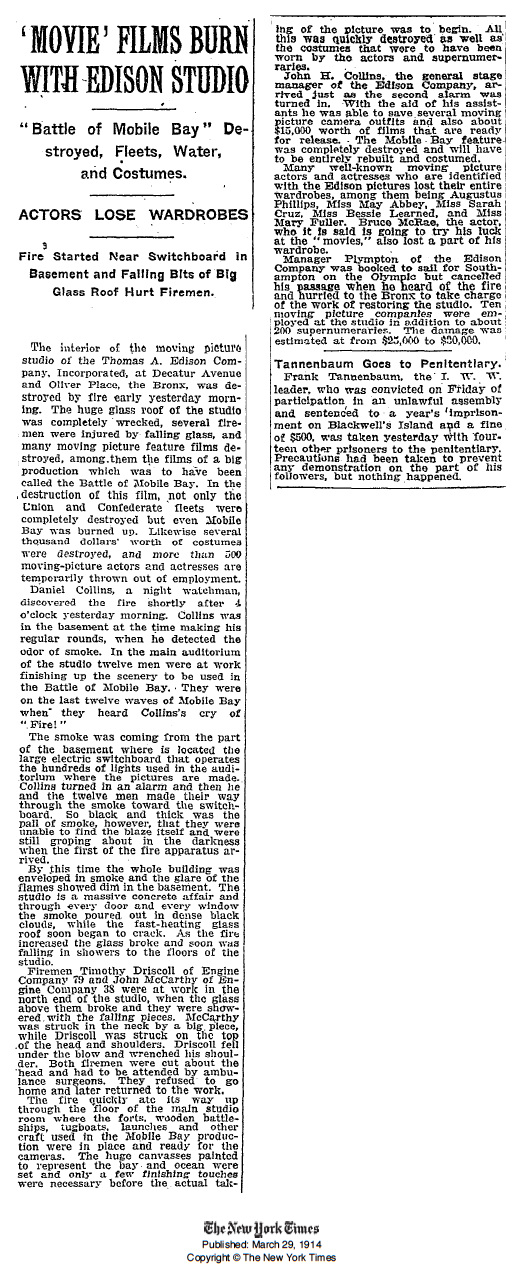
On March 28th, 1914, between production days of the Civil War epic The Battle of Mobile Bay, a fire destroyed Edison’s glass house and gutted the concrete office. Entire wardrobes, hand-built sets, and film prints were completely destroyed, and thus ended Edison’s film-making at this location. … [4]
… It did not, however, mark the end of film-making at this location for others.
Stay tuned for Part 2, in which we introduce Paul Terry, Art Babbitt and D.W. Griffith!
Sources
Before the Nickelodeon: Edwin S. Porter and the Edison Manufacturing Company by Charles Musser
















 babbittblog