1931 Disney Staff Caricatures & Profiles – pt 1

Mickey Mouse 1931 Motion Picture Daily

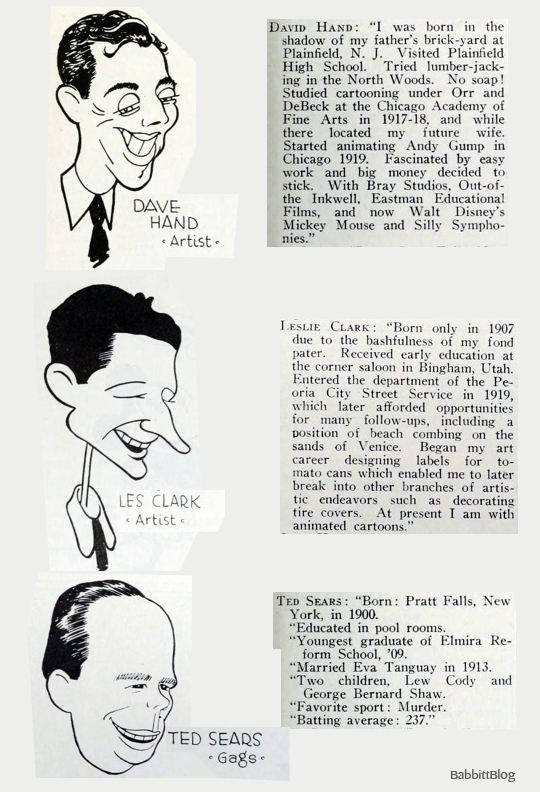
Half by accident, half by definite purpose, I stumbled upon an auction of Disney memorabilia and in it was included a page of a magazine called Motion Picture Daily.  It had caricatures of Disney staffers from the early ’30s.  After a little internet research, I was able to locate high rez pix of not only that page, but its adjoining pages.  What I was able to reap was not caricatures (by Disney artist Jack King) of the 1931 Disney staff, but also brief autobiographical artist profiles that give a window into the youthful and playful behavior of these young creatives.  I’ll post a few of these over the course of the next few days.

Dave Hand Les Clark Ted Sears Disney staff 1931

Posted in 1932-1941: Disney Glory Days, Animation, Disney, Illustration, Mickey Mouse, Nine Old Men | Tagged , , , , , , , | Leave a comment

Fantasia Live at Lincoln Center

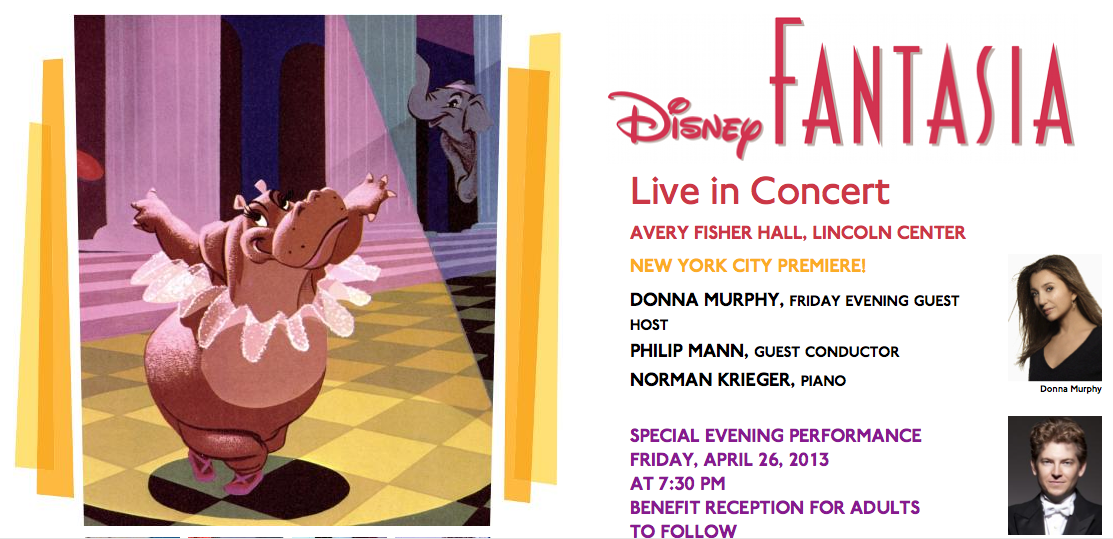
View animation from Disney’s golden age, side by side that of today’s generation.  Sequences from Fantasia and Fantasia 2000  will be screened at Lincoln Center in New York City, accompanied by a live symphony orchestra .  By your tix today!Fantasia Lincoln Center

I hope they include these famous Babbitt characters from the original 1940 cut:

Babbitt Mushrooms Fantasia Babbitt Zeus Fantasia  Babbitt Vulcan FantasiaBabbitt Thistles Fantasia

Posted in Animation, Disney, Fantasia | Tagged , , , | Leave a comment

News: Disney Lays Off Hand-Drawn Animators

DISNEY STUDIOS ENDS 90-YEAR RUN OF DRAWN ANIMATION

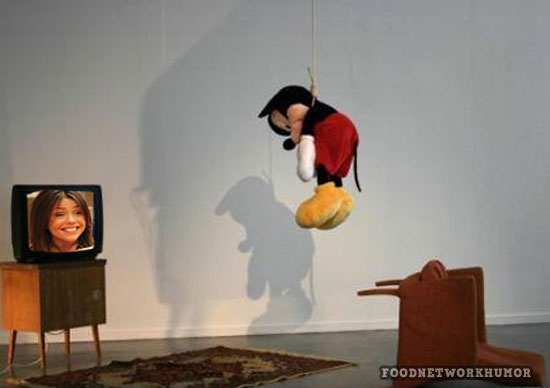
rachael-ray-killed-mickeyThis was reported earlier this evening by Animation Scoop:

Around 150 Disney staffers were let go on Wednesday (less than 5%) as part of an ongoing effort to streamline operations in keeping with new paradigm shifts in social media and digital distribution platforms

A few hours ago, it’s been reported on the social network by a veteran Disney animator that the remaining 2D animators have been laid off as well.

Up to now, there have always been some traditional pencil animators on staff, even if they were being used for Research and Development.  For instance, although Wreck-It Ralph was a CG film, some character tests were animated with a pencil.   However, this marks the first time since the Disney studio began in 1923 that no hand-drawn animation is taking place.

It’s times like these that I wonder what Art Babbitt would think.  I have no doubt he’d side with Walt on this one.  He’d talk about the limited stories that have been told with CG animation, and how you’ve got to be an idiot to think that a few pixels make a film a better story.  But I’ll leave you with this:

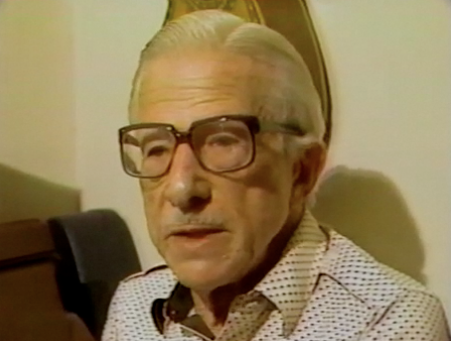
Babbitt 1982“It never seems to occur to anybody that there’s a whole world of literature and music that’s never been touched!”                   – Art Babbitt, circa. 1982

Posted in Animation, Disney | 3 Comments

Margaret Thatcher and Labo(u)r Strikes

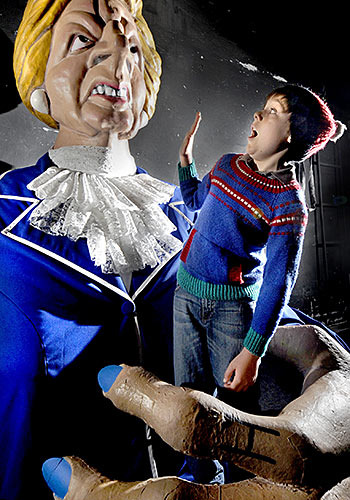
Yesterday’s news that Margaret Thatcher passed away left me with recollections of the musical “Billy Elliot.”  Did you manage to catch this show while it was on Broadway?  Its backdrop is the tumultuous UK coal miners’ strike in the 1980s, and Ms. Thatcher is vilified by the “strikers” in caricature, ridicule and song.

Billy Elliot Maggie Thatcher

It kind of reminded me of the the Disney strikers.

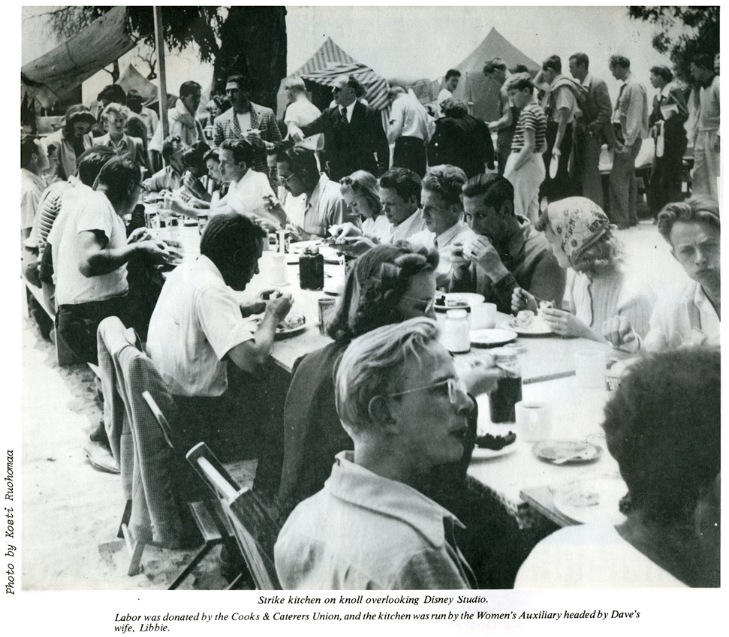
Disney Strike, c1941 (photo: Kosti Ruohomaa)

My father, who was arrested for striking with with his fellow teachers against the Philadelphia public school district in 1972, had this to say about the practice:

blockadeYou take away the people’s right to strike and you take away the only power they have.  They have no money to offer, but what they can do is not work.  There’s a term for when you’re not allowed to strike: “involuntary servitude.”

My friend and writer Josie Glausiusz, a bonafide Briton who was a budding young thinker during Thatcher’s political reign, had this to say:

JGIt was well known for a long time that the coal mines were not profitable and previous Labour governments had been subsidizing the mines for years. Labour governments would never have done what Thatcher did because the Labour Party was founded by the unions and received major support from the unions, which had voting rights within the Labour Party. In retrospect I don’t think it was so terrible that many of the mines were closed, although thousands were put out of work. Coal is a very dirty, polluting fuel, so from an environmental point of view it was probably a good thing. 

She was a polarizing figure – most people either loathed her or loved her. I did not agree with many of her policies – cutbacks in social services, support for nuclear weapons. However, I was actually rather surprised and dismayed to see many of the hateful comments on Facebook posted yesterday – for example “Maggie Maggie Maggie, Dead Dead Dead.” (Demonstrators used to yell “Maggie Maggie Maggie, Out Out Out.”) Whether you agree with her actions or not, I think that as a Prime Minister who transformed Britain, she deserved a modicum of respect – especially when you think about the fact that when the very popular “New Labour” succeeded her in 1997, they more or less continued her policies.
Posted in 1941: The Disney Strike, Disney, Labor, miscellaneous | Tagged , | Leave a comment

The Camel with Wrinkled Knees

CamelWithWrinkledKnees

One of Babbitt’s best latter-day scenes is from the feature film, Raggedy Ann and Andy: A Musical Adventure (1977), directed by Richard Williams.  For 1970s animators and kids of the 1970s/early 1980s, the film is still appreciated; for almost everyone else, it’s unfortunately forgotten.

Babbitt tackled the Camel With Wrinkled Knees as being three characters in one, each acting independently: the front half, the back half, and the head.  Babbitt used film reference of himself bobbing across the park (filmed by his wife Barbara) for these different character sections.  If you watch the animated clip, you can almost imagine two uncoordinated bumblers moving independently in a single Camel costume.

Posted in 1946-1970s: Later Years, Animation, Film | Tagged , | Leave a comment

This Calls for a Celebration!

Today BabbittBlog celebrates its One Year Anniversary!

Geppetto Art Babbitt

Thank you to everyone who commented, “Liked,” Followed, and supported the ongoing research of Art Babbitt’s upcoming biography!

Posted in miscellaneous, Pinocchio | Leave a comment

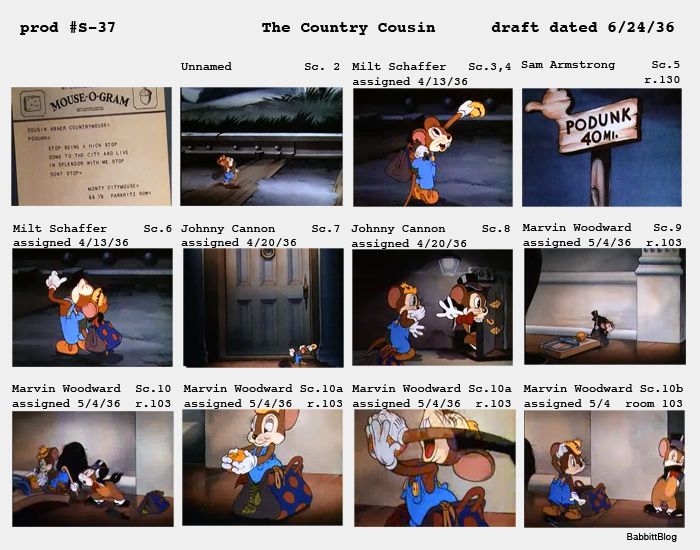
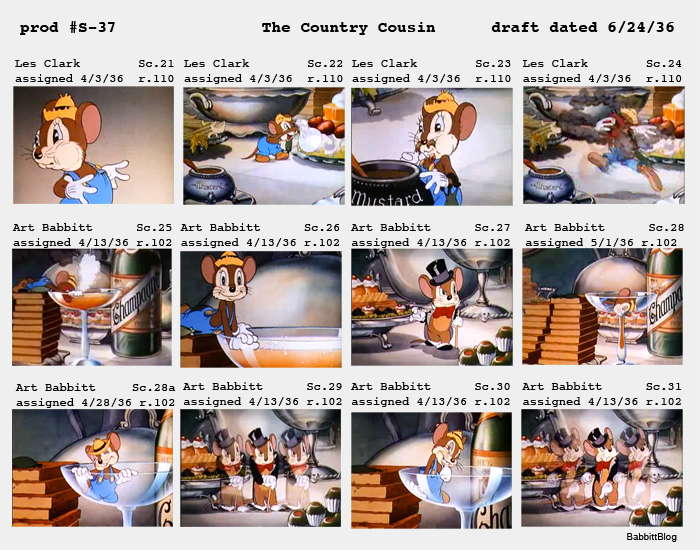
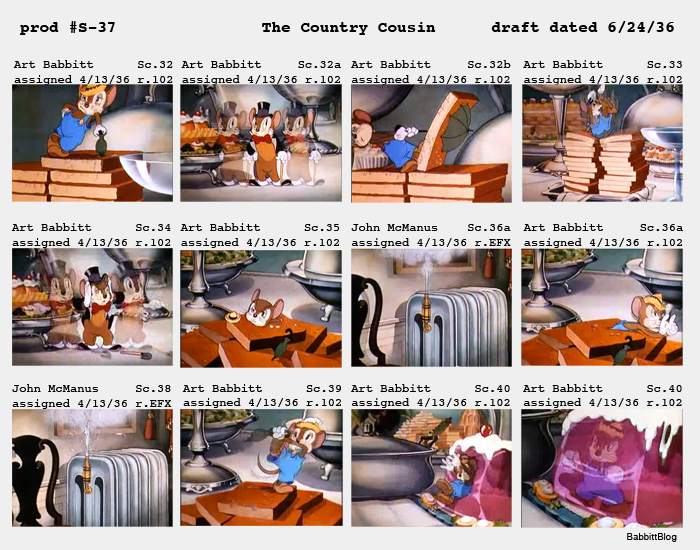
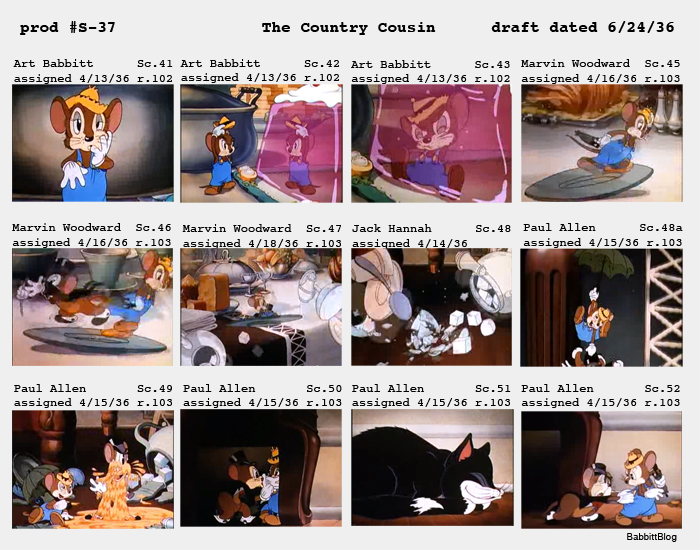
Country Cousin Draft Mosaic

One of Babbitt’s greatest animated sequences is of drunken Abner, the Country Mouse, in Disney’s Oscar-winning short, “The Country Cousin” (1936).  This mosaic of the animator draft not only includes the names of the artist for each scene, but also his room number and the date the scene was assigned.

CountryCousin Mosaic p1bCountryCousin Mosaic p2 CountryCousin Mosaic p3 CountryCousin Mosaic p4 CountryCousin Mosaic p5 CountryCousin Mosaic p6b CountryCousin Mosaic p7

Posted in 1932-1941: Disney Glory Days, Animation, Disney | Tagged , , , , , , , , , | Leave a comment

The Tornado Outbreak of 1913

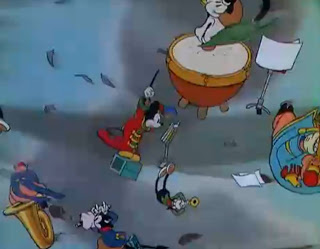
Band+Concert+5

People’s lives are shaped by the experiences they have as young children.  For Walt Disney, it was the fairy tales and old Americana he was introduced to as a struggling paperboy in Missouri.  For Art Babbitt, it began with a natural disaster.

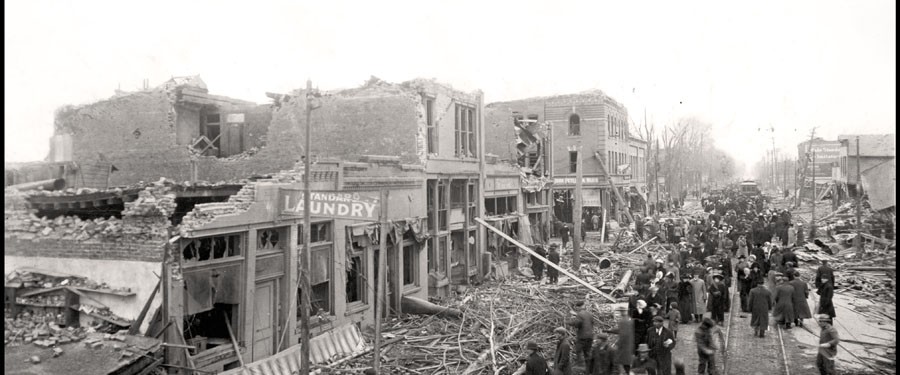
Tornado.2-900x375

This weekend marks the centennial of the infamous 1913 tornado outbreak that destroyed parts of Omaha.  What the 1871 fire was to Chicago, this disaster was to the Nebraska city where Art Babbitt was born and his family was living.  The tornado hit at 6pm on March 23, Easter Sunday, which coincided with the Jewish holiday of Purim; it blew through Douglas County and the Jewish quarter there.  Arthur Babitzky was five and a half years old.

trackoftornado24

A Jewish population getting together in the wake of the Omaha tornado

Shloime Babitzky, Art’s father, was a peddler and a religious Jewish scholar.  Although the original Babitzky home was on 1436 South 13th street, by the time Art was in kindergarten at the Kellom school, they lived across the way at 2216 Charles Street.  Their home was almost right on the intersection of 24th and Hamilton street, dangerously close to  the direct path of the tornado.  Church congregations were flattened; babies were sucked out of windows.  In all, 94 people died in Omaha that day.  Art said, “My father figured that God, if you believe in God, was trying to tell him something.  That’s when he decided that we should move away from tornadoes, and we moved to Sioux City Iowa.” [1]

BabitzkyFamily1912

The Babitzky Family ca. 1912. Clockwise from top: Zelda, Shloime, Irving (Ike) and Arthur

Art’s brother Ike [b. 1911] remembered: “In 1913 we moved what amounted to a hundres miles up the Missouri River, north, to Sioux City Iowa where the climate was supposed to have been better.  Not like today when people pick up and go to Arizona or Florida, a thousand or fifteen hundred, two thousand miles.  We went a hundred miles up the river.  And I’m sure we went by horse and wagon.  With all the household possessions and everything.” [2]

Art said, “We were so poor at the time, we arrived in Sioux City on the 21st of February, of whatever year that was [1914], and there had been a heavy snow.  We did not have the car fare from the railroad station to our alleged home that my father had prepared.  So we were obliged to walk about two or three miles through the snow, which led to my mother giving premature birth to my sister [Fannie] on George Washington’s birthday.” [3]

[Special thanks to Babbitt cousin Denise Silverman in Omaha, Art’s nephew Alan Babbitt, and historian Michael Barrier.]

Sources:

  1. Art Babbitt to Michael Barrier, 1986.
  2. Ike Babbitt to Alan Babbitt, 1987.
  3. Art Babbitt to Bill Hurtz, 1970s.
Posted in 1907-1924: Sioux City Kid, Photography | Tagged , , , | Leave a comment

Dennis the Union Menace

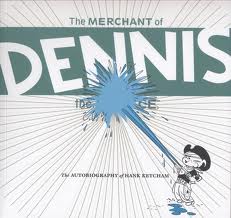
Merchant of DennisI recently got a hold of the autobiography of Hank Ketcham, creator of the comic strip Dennis the Menace, aptly called The Merchant of Dennis.  The book is filled with photos and illustrations on every page, and reminds me a lot of Bill Peet’s autobiography. It was published posthumously in 2005, so it includes a recounting of Ketcham’s whole life as well as his own unique opinions about every step along the way, including his stint at Disney Studios from 1938 through the Disney Strike, which, he says, happened “to no one’s surprise”.
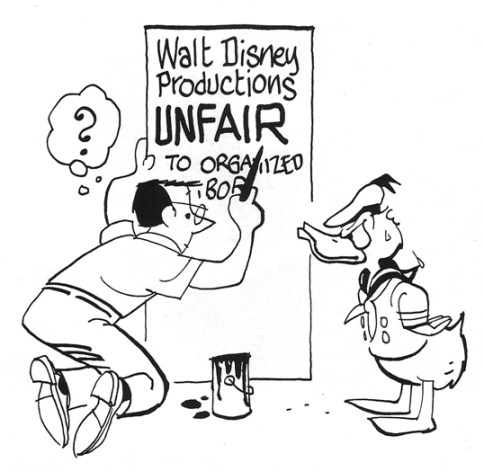
Hank Ketcham Disney Strike

“Most of the men in my unit were recently married, just starting a family, and scratching to make monthly mortgage payments, barely making ends meet.  They had every reason to join the picket line at the gate.

“To me, the Teamsters were a bunch of heavy-handed spoilsports interrupting my ‘life of Riley,’ but I could easily empathize with my older colleagues, so I became one of the marching sign-carriers  … it was obvious that the Kansas City Mouseketeer had to loosen his purse strings or perish.” [pp 53-4]
Herb Sorrell at the Disney Strike

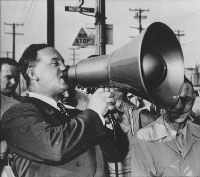
Herb Sorrell at the Disney Strike

These “Teamsters” were the professional organizers brought on to help the Disney strikers, led by Herb Sorrell.  Spoiler Alert: While there are Strikers and there are Scabs, Ketcham is a self-described “Fink”  – i.e. a striker who switched to a scab.

“As serious as the issues were, it all struck me as infantile behavior.  And the rantings of Teamster official Herb Sorrell, dramatically recounting days on picket lines at the Ford Motor Company and telling about the clubs and lead pipes [that] goon squads used to make their point, upset my native conception of fair play and good taste.  Even the ‘soup kitchen’ seemed symbolic of the Depression and a step in the opposite direction from where I wanted to go.” [p54]
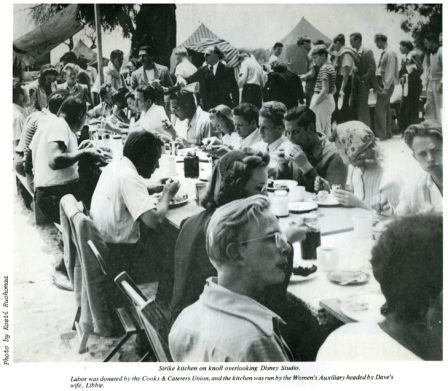

Disney Strike Soup Kitchen

Hank Ketcham

Hank Ketcham ca.1941

A few days in, Ketcham broke the strike and went back to work, along side his loyalist friend Dick Kinney.  Dick’s brother, Jack Kinney, was a top director at Disney at the time, but the Strike outcome would not effect the directors one way or the other, so they were left alone.  Herb Sorrell had been a union organizer-for-hire for years, and whether he had anything to do with the Ford motor strikes of  January 1937 or April 1941 doesn’t make them any less significant in the minds of the strikers.  Ketcham would continue working at Disney studio for another four years, but he closes this section of his career with melancholy longing:

“It was a shattering experience for many; as in any civil war, the house was divided and close friendships evaporated.  Years later the stigma remained, and all concerned were still labeled.

“The years of innocence had ended, and with that a great deal of fun.  We were now card-carrying members of the Screen Cartoon Guild, Local 852, Brotherhood of Painters, Decorators and Paperhangers of America.  A row of timeclocks was installed, the Penthouse Club folded, Mary Flanigan’s room service was suspended, the Ping-Pong tables were put into storage, and Walt went into a seven-year snit, determined to bring the Teamsters Union to its knees.  Bad vibes were all over the place.”

Posted in 1941: The Disney Strike, Disney, Hollywood | Tagged , , , , , , , , | Leave a comment

SAG and the Disney Strike – June 1941

SAG emblem

In the early days of the Disney strike, (probably within two days of the first picket,) chairman of the Screen Cartoonists Guild Art Babbitt, with Disney striker John McLeish, contacted the Screen Actors Guild and petitioned the SAG executive board for their support.  SAG was one of the first Hollywood unions, dating back to 1933, and by 1941 included actors Robert Montgomery, Aline McMahon and John Garfield, as well as executive board member Ronald Reagan.

Babbitt’s approach was successful – the victory of SAG’s support was published in the striker news bulletin “On the Line”, which had already begun a daily circulation.  Not only would SAG help the hungry strikers financially, they promised to report on the Disney Strike in their own national bulletin. [1]

The strike itself began on May 28th, 1941.  If the SAG June bulletin was published at the start of June, it’s remarkable how quickly the strikers organized their efforts.  As reported, chalk talks, 24-hour schedules, and “flying squadrons” (a great name for theater picketers) and a working soup kitchen were already completely  functioning.  Read below for the entire article.  [special thanks to the Screen Actors Guild archives] [2]

SAG bulletin June 1941 01 SAG bulletin June 1941 02


Sources:

  1. Disney’s Giant and the Artist’s Model, by Adrienne Tytla, 2004
  2. The Screen Actor, June 1941


Posted in 1941: The Disney Strike, Disney, Hollywood, Labor | Tagged , , | Leave a comment