Saving Mr. Banks

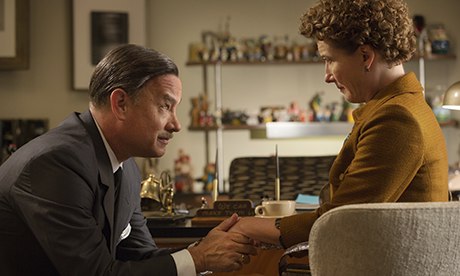
Saving Mr Banks I just saw Saving Mr. Banks, a dramatic re-enactment of author P. L. Travers and Walt Disney’s head-to-head on the making of 1964’s Mary Poppins.

I loved it. Probably due to the Sherman brothers.

As a Disney historian, there were some things that stood out, for good or for ill.  So I’ll just label what left the greatest impact on me.

Positive: The attention to detail.  From the awards to the magazines on the wall, to the studio lot, to the 1961 version of Disneyland, to Walt’s mid-west homespun dialogue (in the first half of the film), this felt completely true to life.  His hacking cough from his smoking habit was there, too – and we even catch a glimpse of him snuffing a tobacco product of sorts, although we never actually see him with a cigarette in his hand.  The mythos of Walt’s charm and charisma comes through, and his dialogue is expertly written. Until …

Negative: When Walt shows up at Travers’s door at the climax, he delivers a monologue that feels like a script from his television show.  As Art Babbitt said, “When Walt used a three-syllable word, you know it was written for him.”  Indeed, candid recordings show Walt using the vocabulary of someone who never finished high school.  His final speech to Travers has him in a suit, with his hair slick back, sitting on a chair like he was the self-titled persona he portrayed on television.  It did not feel authentic.  I doubt the real Walt was as much an armchair psychotherapist as his character is portrayed in the second half of the film.
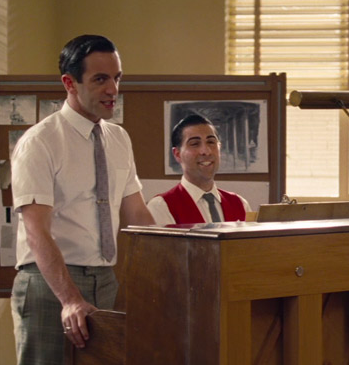
Shermans

B.J. Novak and Jason Schwartzman as Robert and Richard Sherman

However, I nitpick.  Glorifying Walt is something the Disney company is wont to do, and we should be grateful we even have him saying “Damn” at one point.

The shining moments for me were the scenes in which the Sherman brothers play their original songs to a grumbling Travers.  The real Richard Sherman, a living legend and still a dynamo in his later years, was a consultant for the movie, and I have no doubt that these scenes ring truer because of his cooperation.

Not many films make me misty.  But when the Shermans warm Travers’s heart with “Let’s Go Fly a Kite” in the writing room, and when their music causes Travers to weep in the Hollywood premiere, there were tears in my eyes.  On both occasions.

So I, like Mrs. Travers, was sold the project by way of the Shermans.
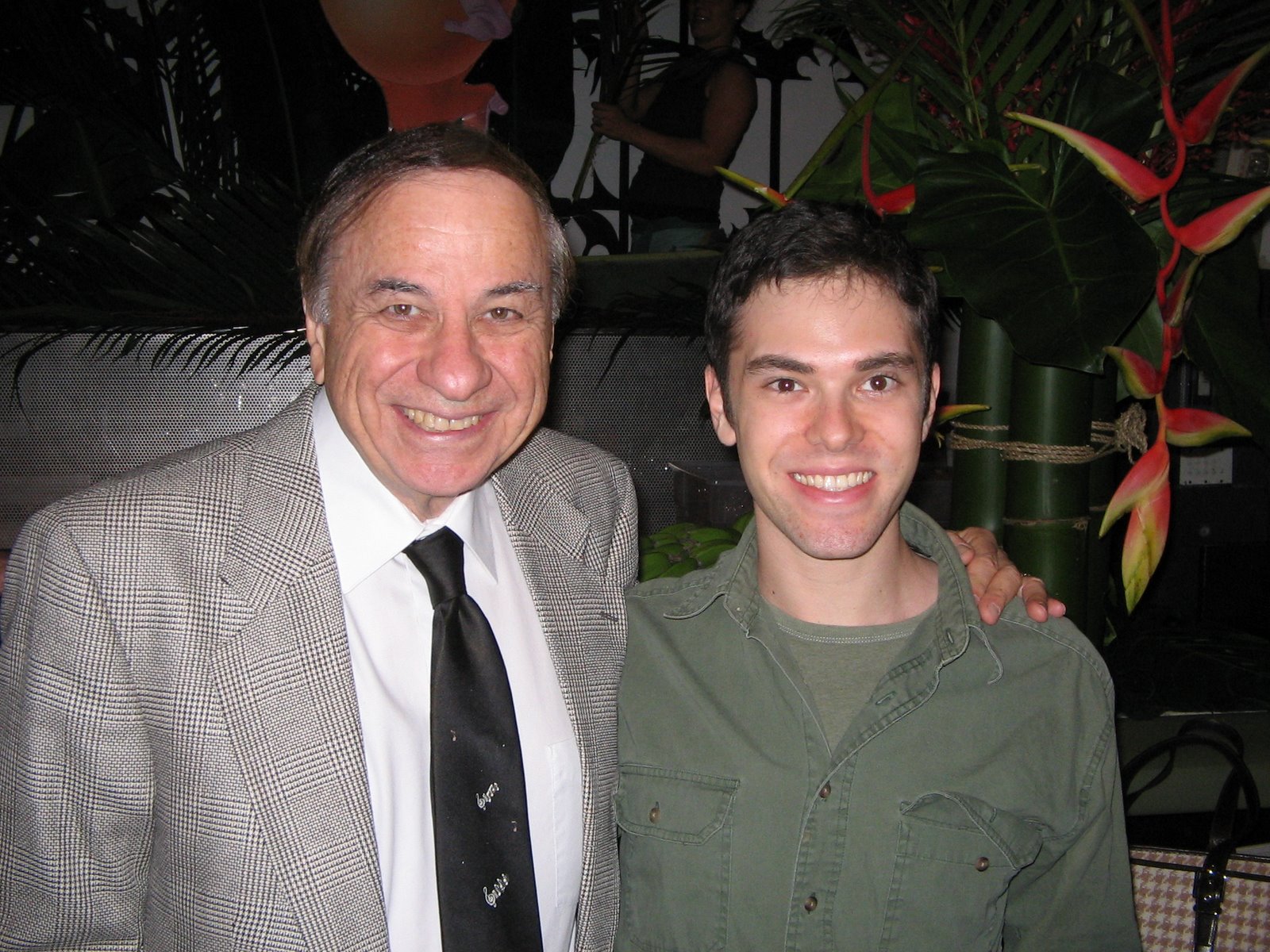
IMG_0264_RSherman

Richard Sherman and yours truly, ca. 2008

Posted in Animation, California, miscellaneous | Leave a comment

Disney Fires Babbitt How Many Times?

A question was posed to me recently: How many times did Walt fire Babbitt?

Strike 01

In his later years, Art Babbitt was fond of saying things like “Disney tried to fire me five different times” for his union activity at the animation studio.  First  some clarification: it was Disney the company, not Walt Disney the person who tried firing him.  And secondly, it wasn’t five times; that’s unreasonable.

According to the National Labor Relations Board trial records, it was four times.

* * *

On May 15-16 of 1941, there was a “layoff” of between 22 to 24  Disney artists, all of whom happened to be members of the Screen Cartoonists Guild, the local union. Babbitt was one of them.  Firing #1.  The union protested and so Babbitt (and the others, conceivably) were hired back on or around May 22.

Babbitt led a union meeting on May 27 in which the SCG agreed to strike in 2 days unless Walt would agree to meet with their committee.

According to Walt, the union didn’t have a majority of his artists, but according to the union, it did.  That discrepancy may be from union honcho Herb Sorrell  padding the numbers, but mostly of semantics.  There were about 330 artists ready to strike, a good percentage of the total employees.  However, many employees were janitorial, maintenance, managerial, secretarial, security, etc., so while the strikers may have counted as the majority of the Artists, they counted as the minority of Employees, and Disney refused to recognize them.
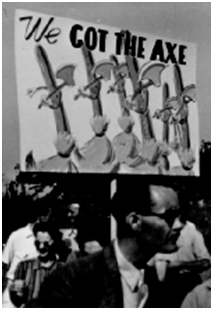
Strike 02On May 28, Babbitt was escorted outside the studio gate by security, along with 17 or so other union member employees (including effects animator Cy Young).  May 29 was the first official day of the Strike. Firing #2.
On July 29, after additional pressure from the union, Babbitt received a note that he would be reinstated.  This, they thought, would end the bitter Strike.  In early August (August 12 according to historian Neal Gabler), because of limited financial resources, company managers drafted a proposed list of cost-related layoffs.  The list had a disproportionate number of union members on it, including Babbitt. Firing #3.

The union shouted foul play, and the Disney Studio agreed to bring in a federal arbiter. The Disney Studio temporarily closed down on August 18 until the arbitration was settled.  It’s finally settled on September 17, and Babbitt is reinstated yet again.
In November, a several Disney artists, including Babbitt, received a mimeograph at their animation desks that they’d be laid off.  Firing #4.

So Babbitt and the union sued Walt Disney Productions  for wrongful termination based on the Wagner Act, the New Deal-era law that makes it is illegal to fire an employee because of union involvement.  This was more than a city or state case – this was a federal court case and required representatives from Washington settle things once and for all. And in 1943, it would be decided in the union’s, and Babbitt’s, favor on all counts

Babbitt would serve in the military for the duration of WWII, and finally resign from the Disney Studio in 1946.

Posted in 1941: The Disney Strike, miscellaneous, WWII | Tagged , , | 1 Comment

Happy 106th Birthday, Art Babbitt

Art Babbitt Apache Casino

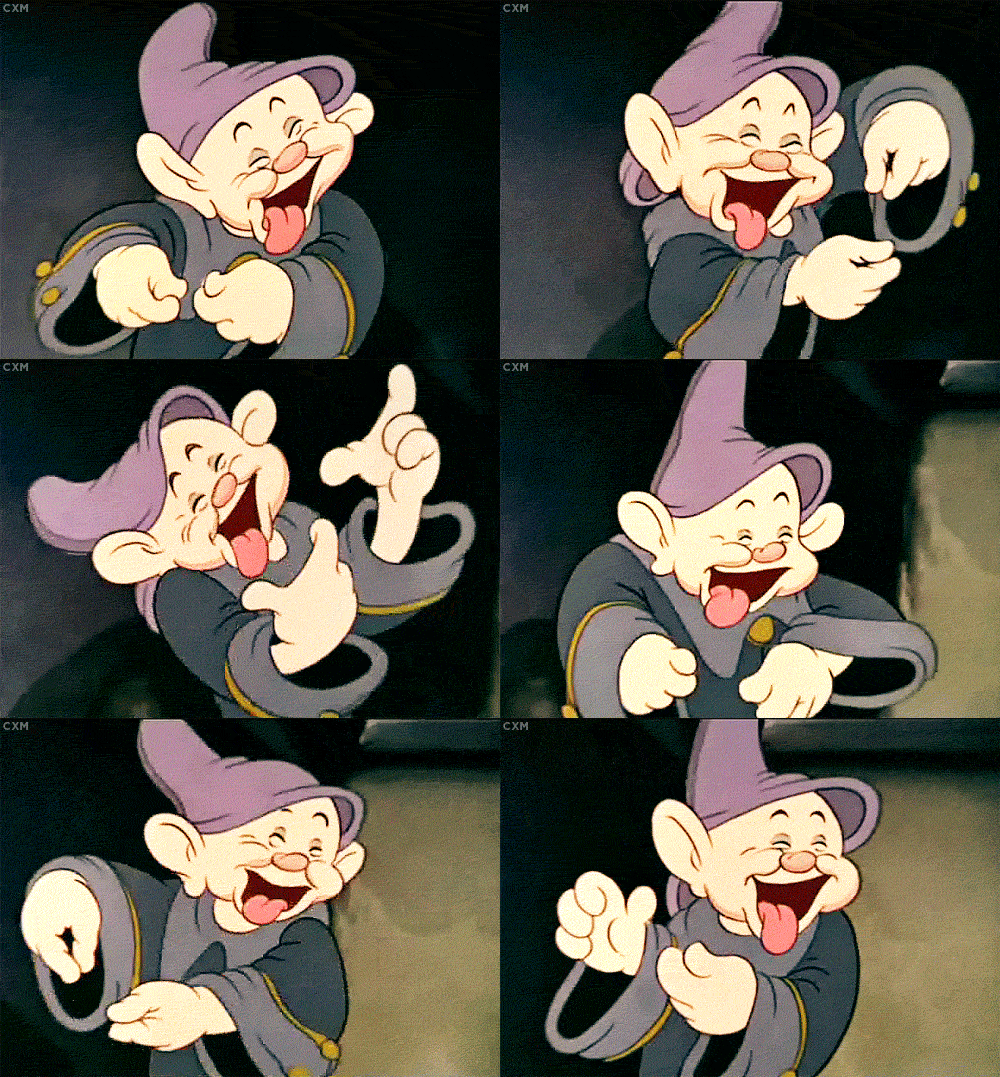
 Dopey Dance

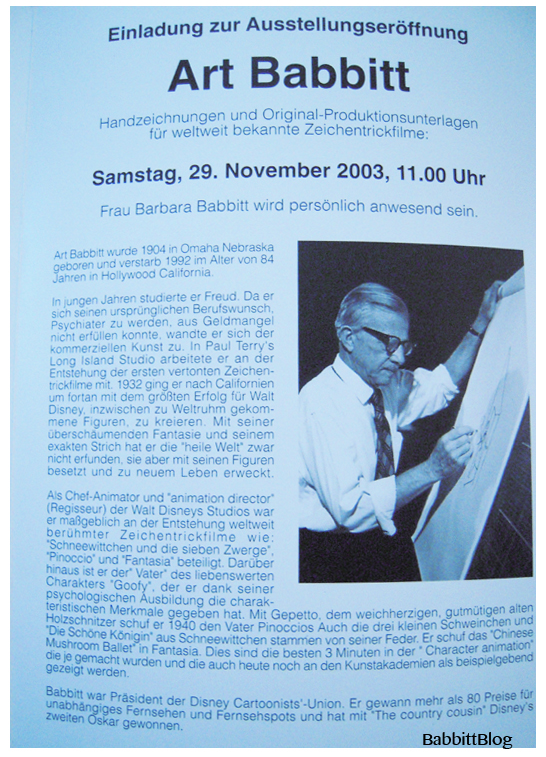
In honor of Art Babbitt’s birthday, I’m sharing an interesting bit of European memorabilia.  Ten years ago this year, Babbitt was honored with an exhibit of his work in Austria’s Gallerie Maringer.   … Does anyone care to translate?

GallerieMaringer01GallerieMaringer02

Posted in 1932-1941: Disney Glory Days, 1946-1970s: Later Years, miscellaneous, Photography, Snow White and the Seven Dwarfs | Tagged , , | 1 Comment

Wicked Queen Gif

Here’s a brief Snow White GIF of some Babbitt animation.

This is Sequence 7A, shot 20A, as the Queen says, “Now begin thy magic spell.”

Wicked Queen GlassAs these thirteen images play on a loop, imagine Babbitt flipping the graphite drawings in his hands, or watching them on a reel in a moviola to test the quality of the animation.

Subtle animation was a novelty, and the slow, slight tilt of the Queen’s head over a span of 26 frames meant that the pencil line variations were exceptionally slight from page to page.


Posted in 1932-1941: Disney Glory Days, Animation, Disney, Snow White and the Seven Dwarfs | Tagged | 1 Comment

Babbitt Sues Over $1.29

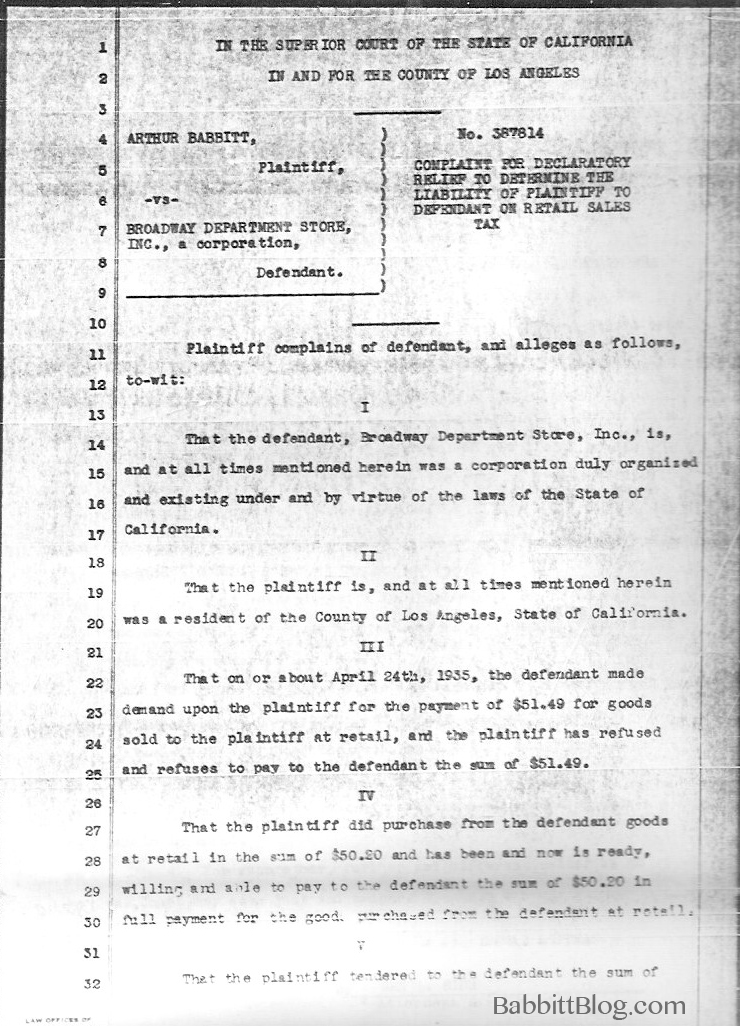
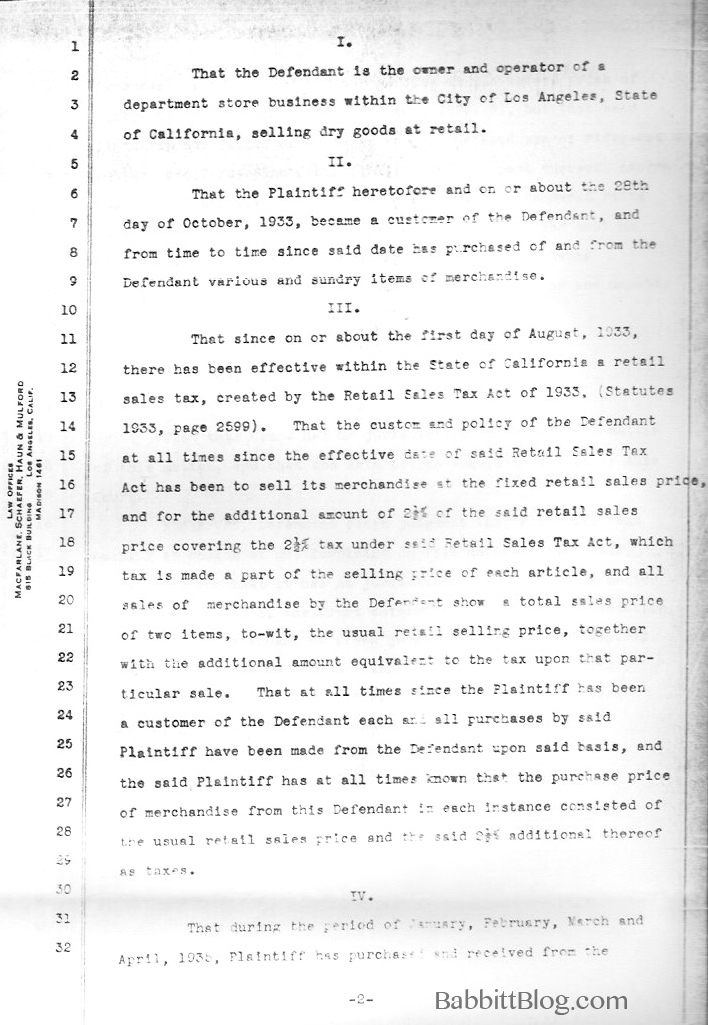
 Babbitt CivilSuit1935_ethicist1If you picked up the New York Times Magazine this past Sunday, you might have glanced at this week’s moral lodestone in “The Ethicist” column. It contextually condemns particular principles that a Mr. Art Babbitt held dear.

The printed query is in regards to suing a doctor for malpractice, even if settling out of court. The columnist, Chuck Klosterman, writes,

“There’s no ethical responsibility to bring a civil suit to trial in order to make a point.”

Babbitt took a civil suit out against Disney in December 1941 over unpaid bonuses. But today I would like to look at what may have been Babbitt’s dress rehearsal for that suit, a court case from 1935, No. 387814.

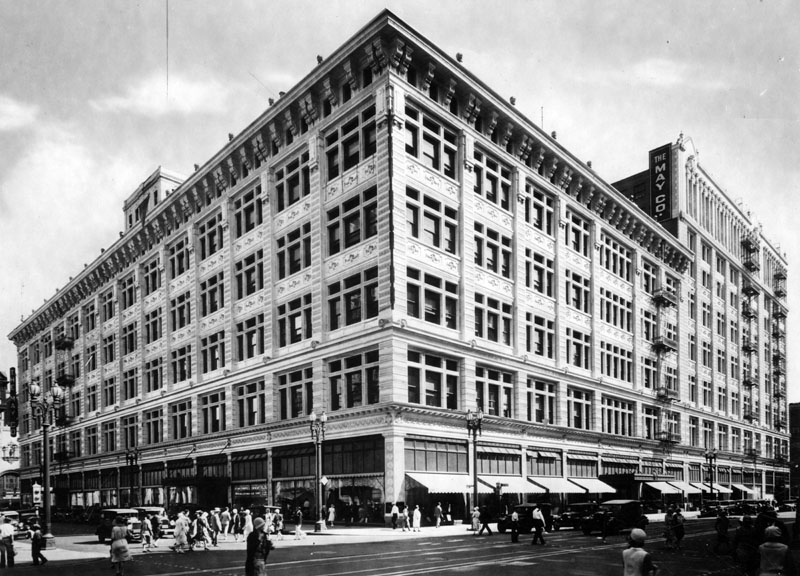
May_Co_1933

The Broadway may have looked like this, The May Department Store in LA, 1933

Disney animators would remember it for years to come as the occasion in which Babbitt sued a local merchant for a handful of pennies. It was studio gossip, and helped build Babbitt’s reputation as principled thorn-in-the-ass. It is likely that Babbitt, at 27, boasted to his colleagues of his assertion. On May 14 1935, he took the Broadway Department Store Inc. to court over sales tax.

To us, such an act seems ludicrous.   But California sales tax was new to Babbitt.  Well, newish.

California state retail sales tax had just been established on August 1 1933, charging 2 ½ % on each purchase. Babbitt became a customer of the store that October. The store’s policy “at all times since the effective sate of said Retail Sales Tax Act has been to sell its merchandise at the fixed retail sales price, and for the additional amount of 2½% […]and all sales of merchandise by the Defendant show a total sales price of two items [ i.e .] the usual retail selling price, together with the additional amount equivalent to the tax upon that particular sale.”

What’s more, “The plaintiff has at all times known that the purchase price of merchandise from this Defendant in each instance consisted of the usual retail sales price and the said 2 ½ % additional thereof as taxes.”

Then, at the start of 1935, Babbitt decided he had a point to prove. From January through April, he was not going to pay his sales tax, and thus had not made a single payment on $51.49 worth of purchases he accrued. Around April 24th, the merchant demanded his money owed, and Babbitt refused to pay him the entire sum. He offered a check for the purchases minus the sales tax, totaling $50.20, and the merchant refused to accept it. Legally speaking, it was a controversy over who was liable over the $1.29 sales tax.

The merchant’s attorneys requested that “this Court determine that it has no jurisdiction of the subject matter of this action” and that the case be thrown out.

You have to wonder at the kind of lawyer that would take Babbitt’s case. I can only speculate what Ben L. Blue & Thomas Lippman, Babbitt’s attorneys, charged him for their services before and during the July 3 trial.

On November 18 the case was dismissed.  As Klosterman writes,

“If every person who felt wronged pursed a lawsuit on principle, the court system would collapse (thereby delaying and complicating the cases of people in far more desperate situations than your own).”

Babbitt would encounter a more desperate situation in December 1941, when he brought a civil suit to Walt Disney.

Selected pages of Babbitt’s 1935 court case are shown below.

Babbitt CivilSuit1935_ 1 Babbitt CivilSuit1935_ 2 Babbitt CivilSuit1935_ 3 Babbitt CivilSuit1935_ 4 Babbitt CivilSuit1935_ 6

Posted in 1932-1941: Disney Glory Days, California | Tagged , | Leave a comment

“Persistence of Vision”

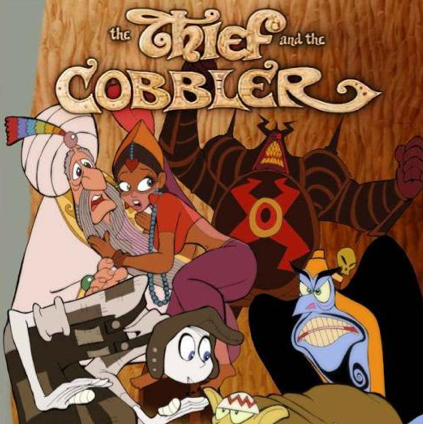
Thief and CobblerKevin Schreck’s unauthorized documentary on the making of The Thief and the Cobbler called Persistence of Vision has been running the festival circuit and is making quite a stir.  It’s a cynical dirge about what failed to be the greatest animated film of all time.  Directed by Richard Williams (Who Framed Roger Rabbit), Thief took over thirty years to produce, and after going over budget and past numerous deadlines, the backers removed it from his studio and hired a cheaper and faster studio to complete it.

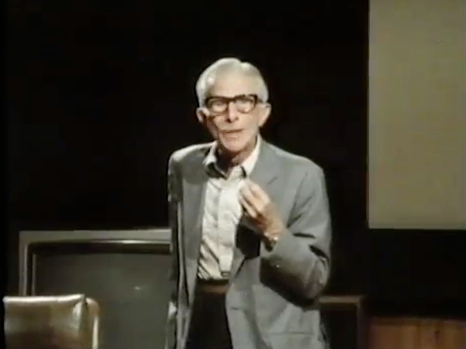
Although not the masterpiece it set out to be, Thief was a training ground for hundreds of new artists, including those who would be part of the animation renaissance of the late-1980s.  These are the artists who studied under Babbitt, who was already a senior citizen and a living animation legend.  Some quotes from the animators in the documentary:

Babbitt03

“The great Art Babbitt.  He was the only guy that ever punched Walt Disney in the mouth.” [editor’s note: not quite, but close.] – Chris Knott, special effects artist

“[Williams] brought Art Babbitt over to run a course on animation teaching us how to animate and it was fantastic – I was so lucky.” – Julianna Franchetti, animator

Babbitt04

“And it was grueling, because, imagine, he’s compressed an entire year’s worth of exercises into a month, and you gotta go home and do a whole exercise that an animator out in California would have had a week to do, you’re doing it overnight.” – Greg Duffell, animator

“We allocated mornings to sit with Art Babbitt and have lectures, obviously, the skills, information towards, and in the afternoon go back to commercials, do commercial breaks, and then go home, and do some homework, and Art would send us a little test to do, and as you can imagine, it’s animation, so it took quite a lot of time.  We were up until four or five o’clock every morning to do all these tests, and then go back the next day, show Art Babbitt, more lectures, go back to commercials, and then go back – it was a fantastic experience.  A valuable learning curve.” Brent Odell, animator

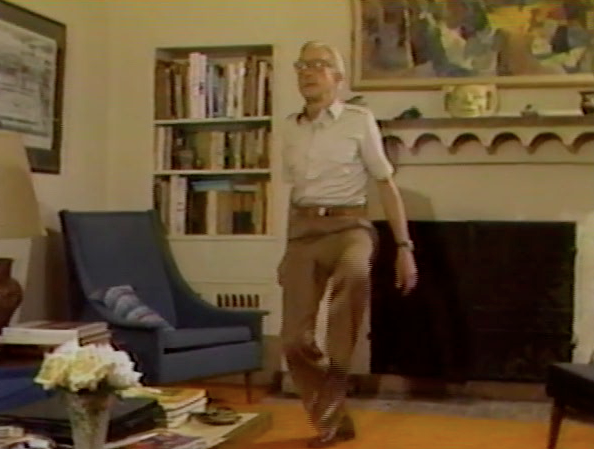
Babbitt06“I’ll always remember Art explaining how different people walked.  And he got up, and did this walk, ‘This is how, you know, people walk.  You know, this is how the cool people walk,’ and he was saying, ‘this is a double-bounce.’  But because Art was so old, all the walks looked to same to us!  They all looked slightly staggering.  But he knew what he meant, anyway.” – Julianna Franchetti

“When Art came over in 1974, [Williams] was directing the commercials.  Art wanted him to succeed – really believed in Dick. And from his knowledge and perspective, Dick was doing things that weren’t being done anywhere else.” – Greg Duffell

“I mean it’s animation. In this world, when you’re an artist and you have a chance to end your life as one of the best artists working on one of the best things, everybody wants to do that!  He thought that Dick had it.  And if he could work for Dick, I mean, where he had the best stuff, he would [do] it.  So that’s what he did.” – John Culhane, historian

Babbitt01“Art Babbitt’s a very practical person, and Art thought about Dick that Dick was saving animation, that he was saving the art, that it was falling into an abyss, and that Richard Williams was the savior of animation.  He was saying that it was this building in London, with these people working in it that were going to save the art of animation, and take it beyond.” – Greg Duffell

“Art said we only scratched the surface of what animation can do.” – Greg Duffell

Babbitt02

Posted in 1946-1970s: Later Years | Tagged , , | 3 Comments

Feature Films and Screen Credits

EpicLast fall and winter, I had the pleasure of helping out the storyboard department on the feature film Epic for Blue Sky Studios.  I was only on the project for a few months, but it was the first mainstream feature film to feature my name in the credits (my first indie feature was Sita Sings the Blues).

There’s something very special about seeing your name in the credits of a film.  Only in the early 1980s did the Disney Studio start putting every crew member’s name on the film credits, down to the last production assistant and inker and painter.  While hundreds of artists worked on films like Snow White and Pinocchio, only a few dozen were credited.  The day Art Babbitt’s mother went to see Pinocchio, she jumped out of her seat when Art’s name appeared on the screen, pointing and hollering with joy that that was her son.

Babbitt Credit Pinocchio

Film credits were a huge point of contention at the Disney Studio in the old days, and proper credits were one of the demands of the strikers.  Ward Kimball wrote in a private letter that all the guys who were irate at the lack of credits would drown their sorrows in booze and sex and move on with their lives.

True loyalists didn’t see what the problem was.  Walt had his name on the studio, so of course his name is the only one entitled to be on the film and every other name is a charitable gesture.  Film credits, however, are a source of pride in one’s work, and a badge of honor and a little power to always take with you.  Union agitators at Disney were convinced that the studio needed its artists more than the artists needed Disney, and that the Studio was trying to prevaricate with the opposite.

When Richard Williams’ Studio produced Raggedy Ann and Andy, each animator is identified by the character he or she animated, truly like an actor playing a role.  Of course, Williams had spent a lot of time with Babbitt, who he identified as the legend-in-residence.  A noble tradition that unfortunately didn’t catch on.

Babbitt Credit Raggedy Ann

After the Strike, not only did the features start displaying a more complete list of credits, but the Disney shorts included names of the artists and writers for the first time.   Once Disney allowed the union, other animation studios followed suit.

And today, an artist who had a few months of work on a feature film gets to have his name attached to a computer-animated feature.  Which reminds me –  Epic is in theaters now, and it’s a lot of fun.  So enjoy it, and look for my name!

Epic_(2013_film)_poster

Posted in 1941: The Disney Strike, Animation, Disney, Labor, Pinocchio | Tagged , , | Leave a comment

The Philadelphia Teachers’ Strike

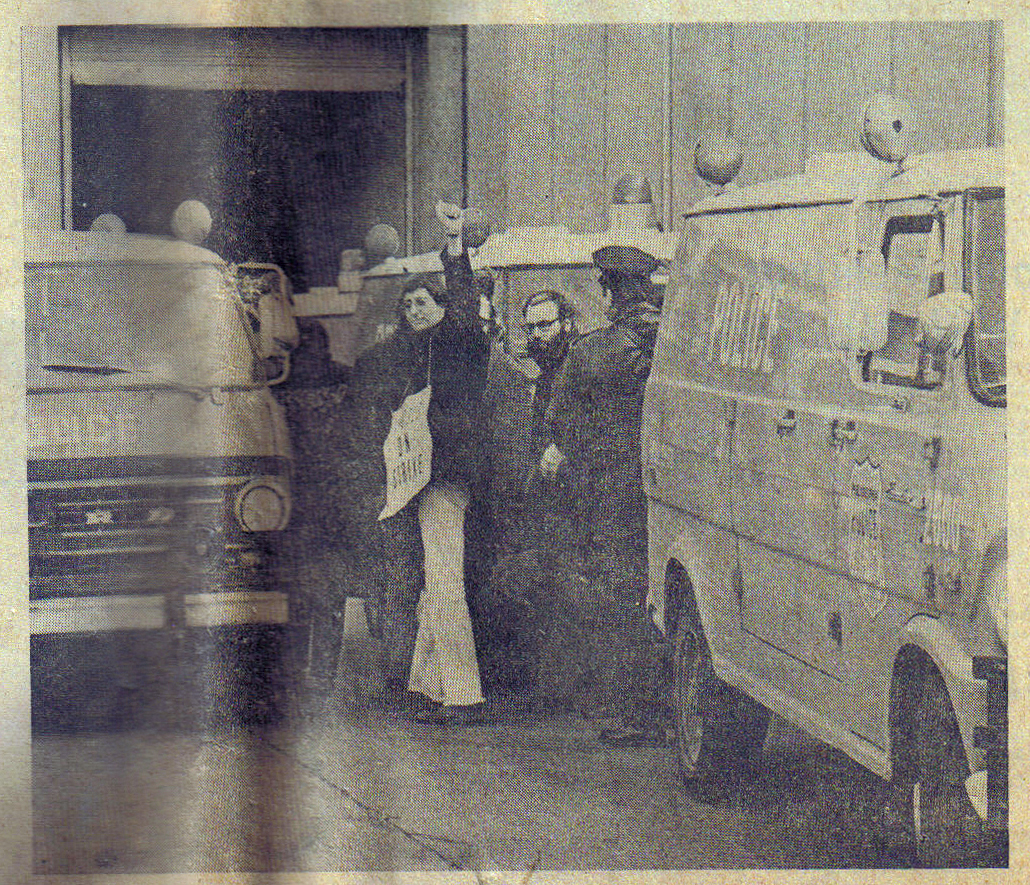
Why I’m interested in labor issues:  Both my parents were arrested.  Read about it in my newly published article for the Philadelphia Daily News.

Joseph Friedman arrested in the Strike

http://www.philly.com/philly/business/labor_and_unions/20130606_Looking_back__The__73_teachers__strike.html

Posted in Labor | Tagged | Leave a comment

Disney on Unfair List

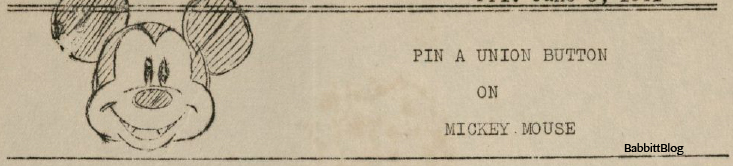
Disney Strike Mickey

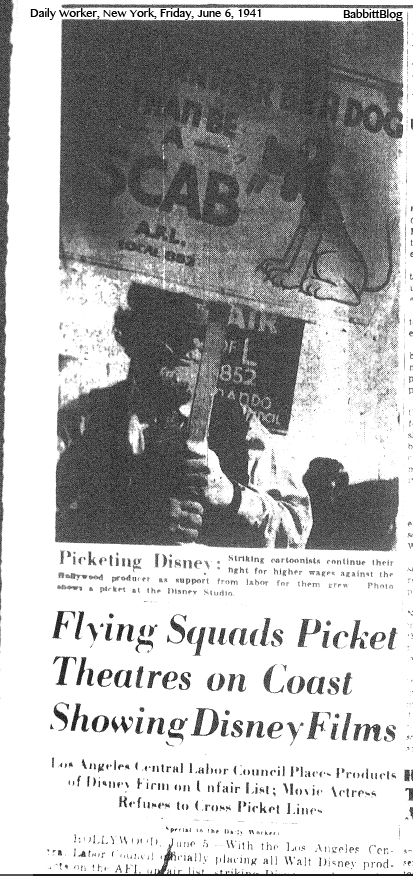
On this date in Disney history, the Walt Disney Studios was spotlighted for the U.S. government’s list of companies with Unfair Labor Practices (ULP).  As the Daily Worker trumpets, “Los Angeles Labor Council Places Products of Disney Firm on Unfair List”.

This is not a top-ten  list from a middle school bathroom stall.  This is the National Labor Relations Board (NLRB) talking, and it had very real consequences.  But first, a review:

The National Labor Relations Act (NLRA – nicknamed the Wagner Act) was the 1935 bill that empowered workers across the U.S. with union rights.  If an employer violated the NLRA rights, the government is obliged step in with an arbitrator to settle it for good.  A federal arbitration, at least in the ’30s and ’40s, seems to have consistently favored the employee.  That’s Roosevelt for you!

Daily Worker Unfair ListOne general violation might be hindering an employee’s right to unionize.  This was exemplified by the the Disney company firing of Art Babbitt on May 28.  This act inspired the walkout of nearly 400 Disney artists, and the summer-long strike.

However there are two sides to every story, and Babbitt had been rallying Disney artists towards an independent union, The Screen Cartoonists Guild (SCG), for some time.  He must have felt cheated – he himself had been the head of the Federation of Screen Cartoonists – a different union – before realizing it was a complete sham: it was operated by the Disney company itself.

Walt was not a very political person, but his chief legal adviser, Gunther Lessing, was.  While Walt was trying to hold the camaraderie of his studio together, Lessing was the person who focused on the struggle of power, and was confident that the strike wouldn’t last more than a couple days.  For the most part, the strikers still admired Walt.  But they hated Lessing with a passion.

Feeling that their rights were violated, the strikers on behalf of the SCG filed a charge against Walt Disney Studios.  The charge was investigated by the NLRB agents, who attempted to gather evidence, interview witnesses, and file affidavits.  The Central Labor Council named a committee empowered to act  to place  Disney on the American Federation of Labor “Unfair” list.

A note from Variety trade magazine:

No action yet taken on … the SCG complaint against the studio on charges of unfair labor practices.  Understood that the delay is occasioned by the inability to obtain witnesses at this time.

Sources:

New York Variety Weekly, June 11, 1941. p13.

Daily Worker, New York.  Friday June 6, 1941. p5.

http://www.nlrb.gov/what-we-do/investigate-charges

http://www.law.cornell.edu/wex/unfair_labor_practices_ulps

Posted in 1941: The Disney Strike, Disney, Illustration, Labor, Mickey Mouse | Tagged , | Leave a comment

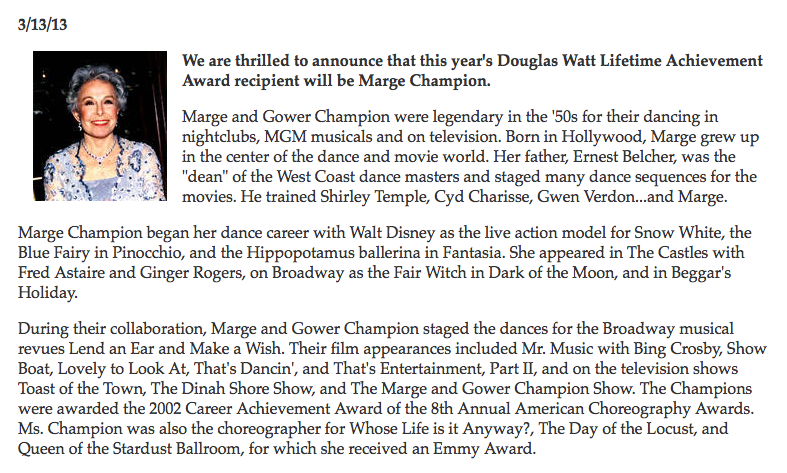
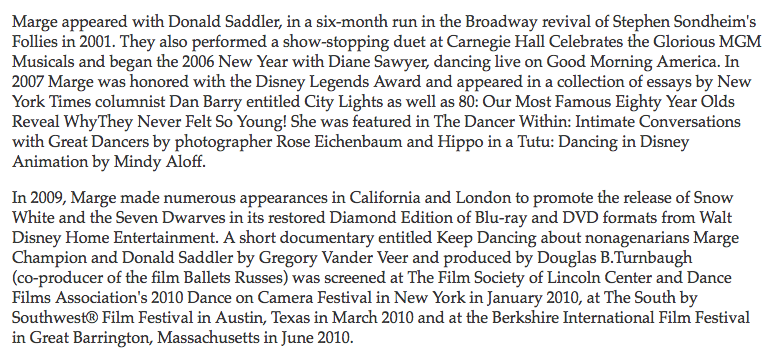
Marge Champion receives Lifetime Achievement Award Tonight!

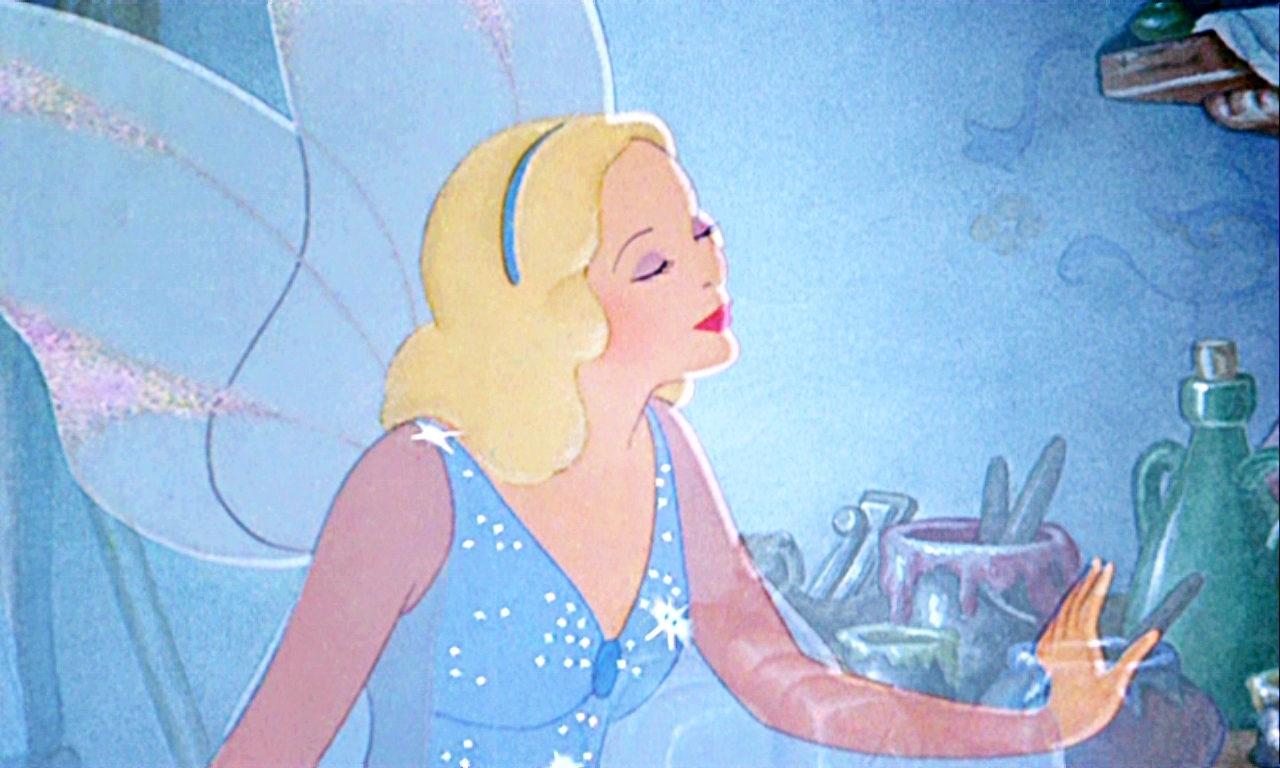
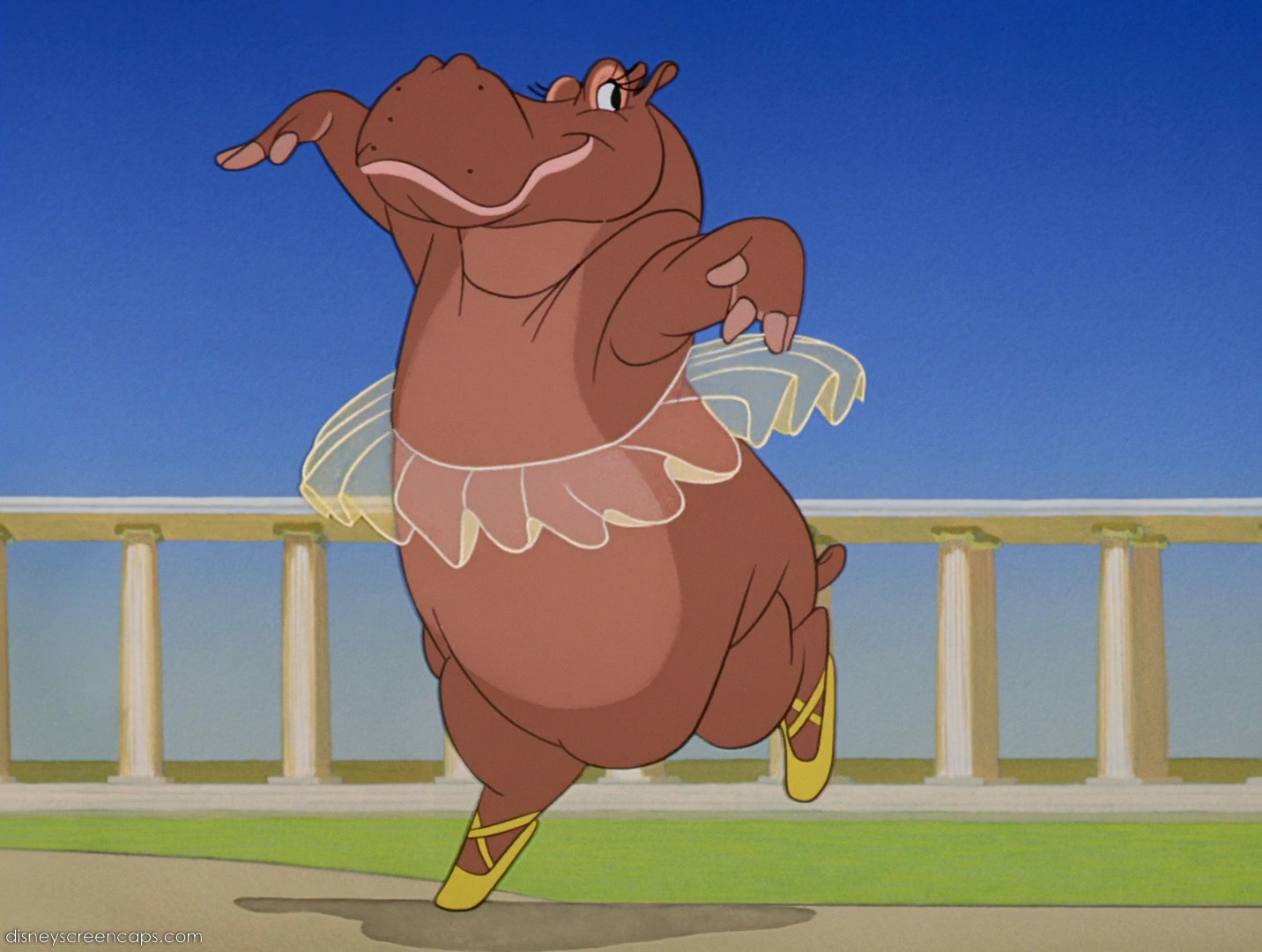
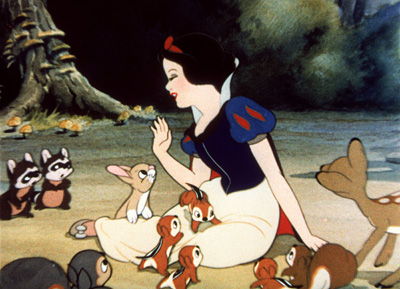
Disney fans might recognize Marge Champion, ex-wife and muse of Art Babbitt, as any one of these three characters:

Marge Champion Fairy Marge Champion Hippo Marge Champion Snow White

But to the dancing public, she’s a legend for her actual on-screen appearances.  And this very night, she is receiving a Lifetime Achievement award from:

Screen Shot 2013-06-03 at 5.20.58 PMScreen Shot 2013-06-03 at 5.22.04 PMScreen Shot 2013-06-03 at 5.22.15 PM


Posted in 1932-1941: Disney Glory Days, Dance, Film, miscellaneous | Tagged | Leave a comment